Powder flasks

Powder flasks hold a distinctive place in the history of firearms and military technology in the Islamic world. Designed to store and dispense black powder, they were an essential part of the equipment used by soldiers, horsemen, hunters, and travelers before the advent of modern loading systems.

The ADLANIA Foundation’s collection of powder flasks brings together pieces from various regions and historical periods, crafted from wood, leather, metal, horn, and composite materials. Their diverse shapes, engraved, carved, or inlaid decorations, and the techniques employed in their manufacture reflect the richness of the Islamic world’s artisanal traditions.

Beyond their practical function, these objects illustrate the close relationship between technical craftsmanship, material culture, and artistic expression. Some powder flasks feature geometric, vegetal, or calligraphic motifs that embody the aesthetic traditions of the societies in which they were produced.

Through this selection, the ADLANIA Foundation seeks to highlight a heritage connected to military history, decorative arts, and traditional craftsmanship, while contributing to the preservation and promotion of this valuable cultural legacy.

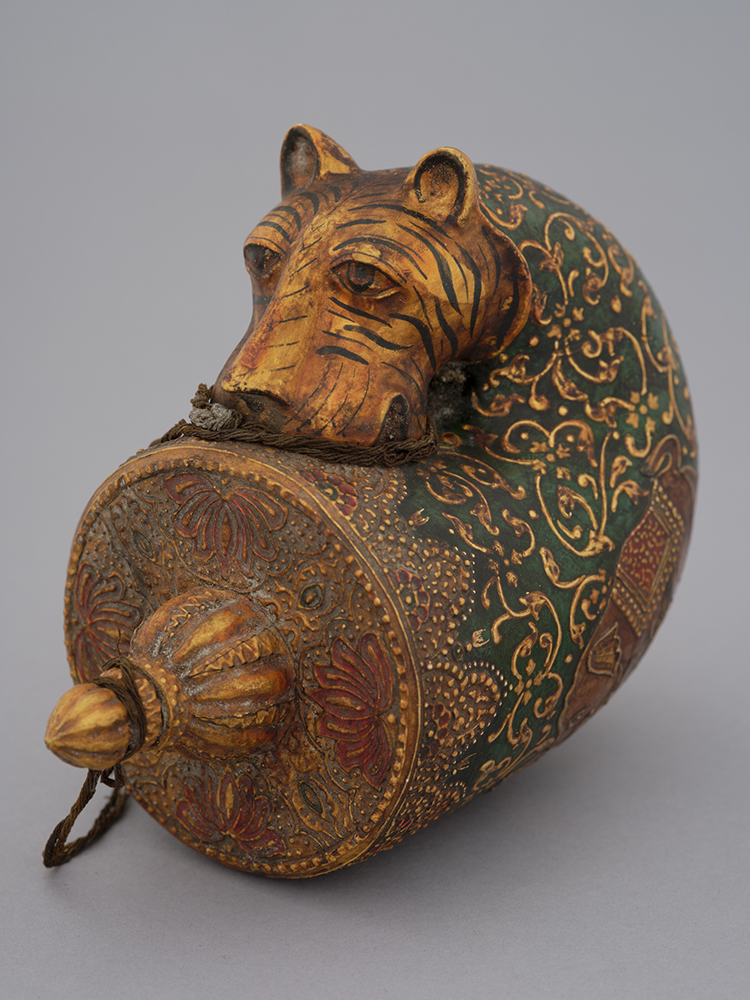
Mughal Powder Flask in the Shape of a Nautilus with Tiger Decoration

OBJ 3148

A prestigious powder flask crafted from lacquered wood, designed in the form of a nautilus shell. Its surface is richly decorated with polychrome floral motifs, scrolling foliage, and hunting scenes, while a sculpted tiger’s head emerges from the composition, lending the piece a powerful symbolic character. The refinement of its craftsmanship, the richness of its decorative details, and the harmony of its colors reflect the sophistication of courtly arts developed during the Mughal period. Far more than a simple container for gunpowder, this object is a remarkable work of art that illustrates the Mughal elite’s appreciation for luxurious and exquisitely ornamented objects.

Estimated date: 18th–19th century

Geographical origin: Mughal Empire (India)
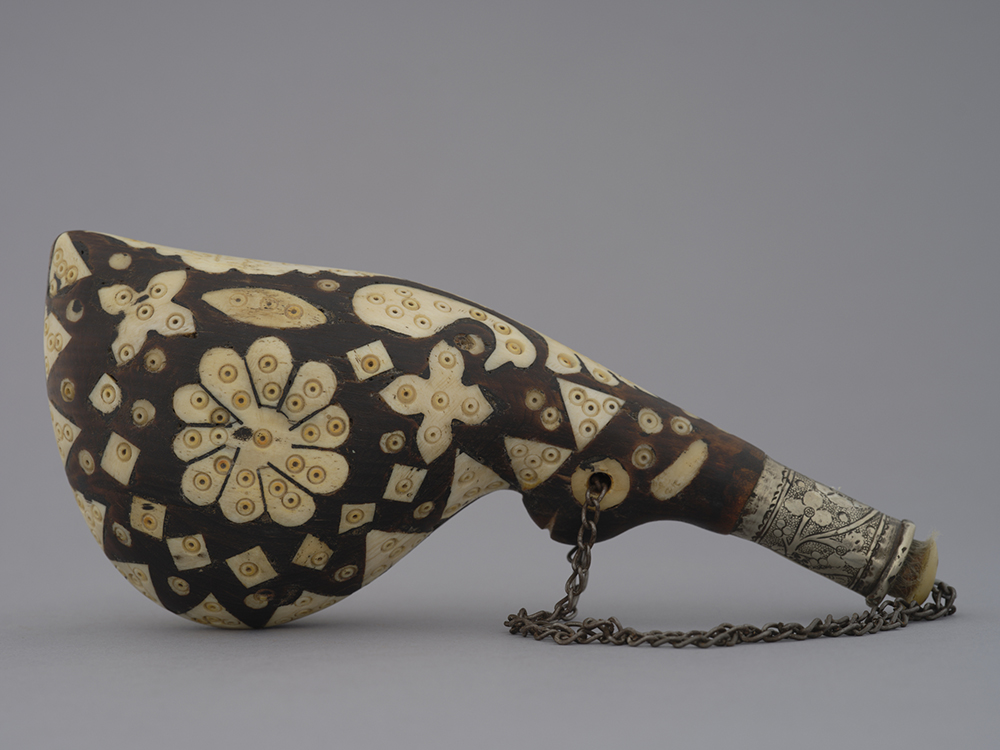
Powder Flask with Bone Inlay and Geometric Decoration

OBJ 1248

Powder flask made from dark horn and richly decorated with bone inlays forming rosettes, stars, and geometric patterns distributed across its entire surface. Its finely engraved metal spout, together with a small retaining chain, completes a highly refined decorative ensemble that reflects the sophistication of decorative arts applied to firearm accessories. Through the harmonious combination of materials and the quality of its ornamentation, this object illustrates the meeting of traditional craftsmanship, aesthetic refinement, and practical function.

Estimated date: 19th century

Geographical origin: North Africa or the Middle East

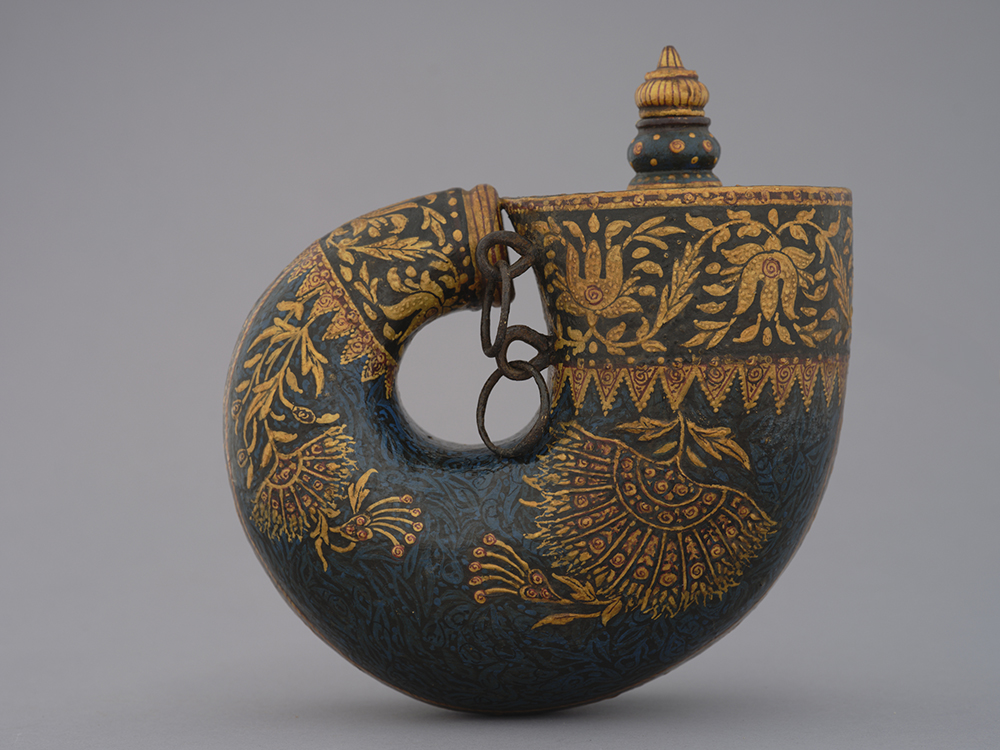
Mughal Lacquered Wooden Powder Flask with Floral Decoration

OBJ 3151

A prestigious powder flask crafted from lacquered wood, featuring an elegant shape inspired by a nautilus shell. Its entire surface is adorned with finely painted and gilded decoration combining scrolling foliage, stylized flowers, and intricate ornamental compositions. The striking contrast between the deep blue background and the gilded motifs highlights the exceptional craftsmanship and reflects the refinement of the decorative arts developed in Mughal India. Designed to hold black powder, this piece transcends its utilitarian purpose to become an object of prestige, illustrating the elite’s appreciation for luxurious and meticulously ornamented creations.

Estimated date: 18th–19th century

Geographical origin: Mughal Empire (India)
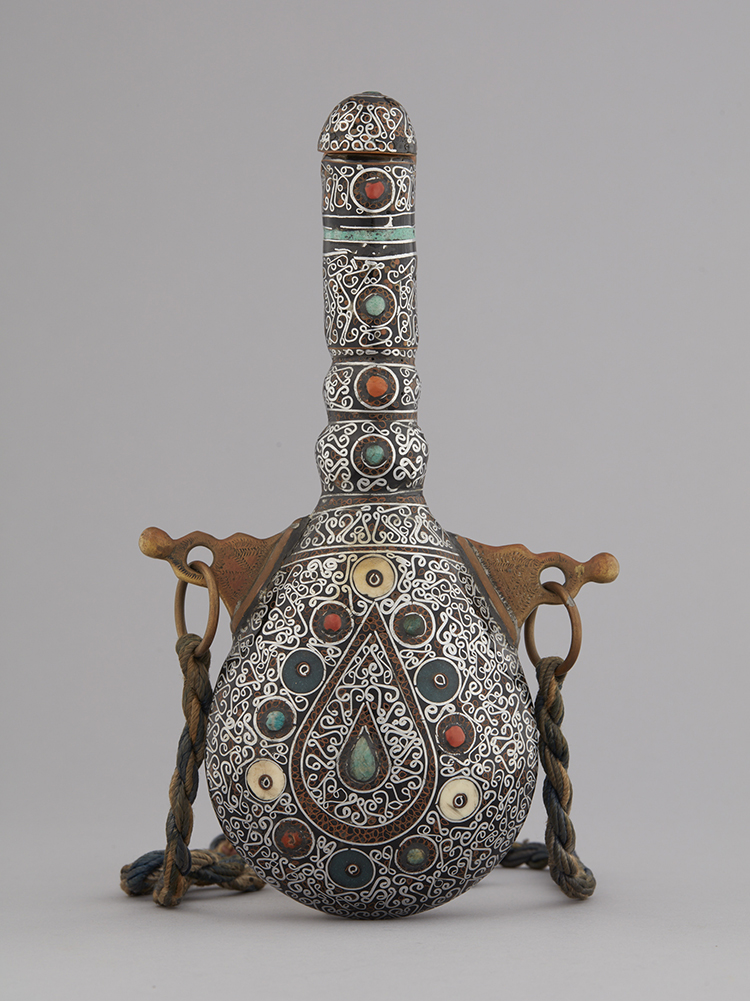
Powder Flask with Metal Filigree and Colored Cabochons

OBJ 437

A prestigious powder flask lavishly decorated with an intricate metal filigree design covering its entire surface and enhanced with colored cabochons arranged in a symmetrical composition. Its elegant shape, long cylindrical neck, and suspension rings reflect its practical function, while the refinement of its ornamentation demonstrates exceptional craftsmanship. The delicate interlaced filigree, combined with the polychrome inlays, transforms this firearm accessory into a true work of art, illustrating the elite’s appreciation for luxurious and meticulously crafted objects.

Estimated date: 19th century

Geographical origin: Afghanistan, Central Asia, or Northern India

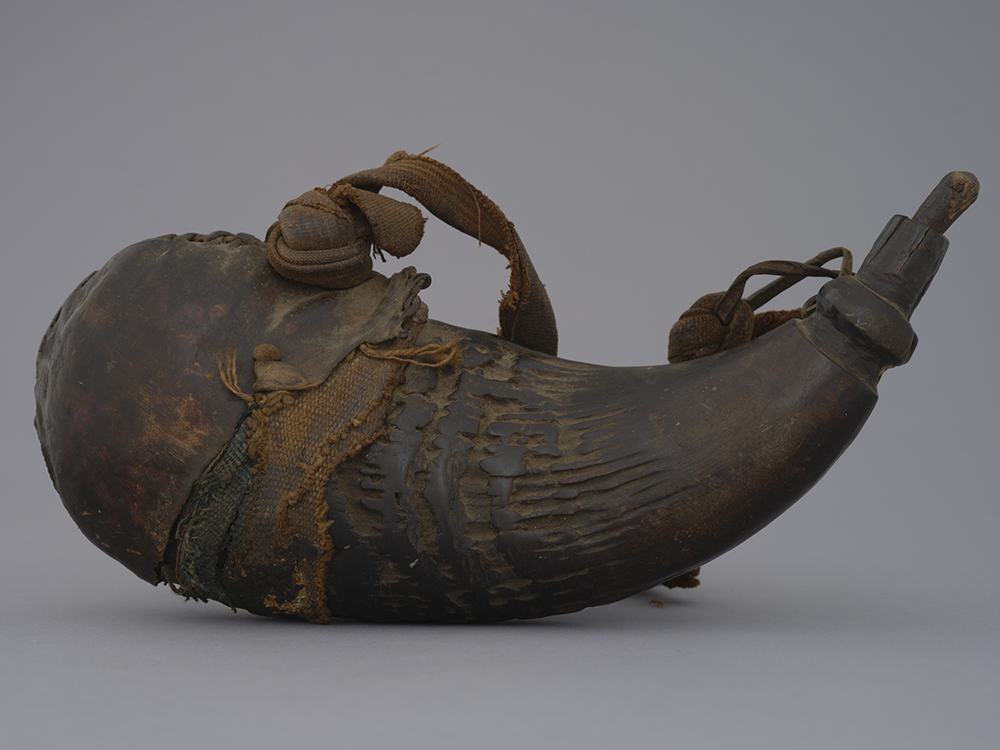
Moroccan Leather Powder Flask

OBJ 364

Powder flask made of molded and stitched leather, featuring a curved shape inspired by the animal horns traditionally used to carry black powder. Its understated decoration highlights the natural texture of the leather and the craftsmanship involved in its making, while its suspension fittings indicate that it was commonly worn by hunters, horsemen, or armed travelers. This object illustrates Moroccan artisanal traditions, in which simple materials were transformed into durable accessories suited to the needs of nomadic and rural life.

Estimated date: 19th century

Geographical origin: Morocco

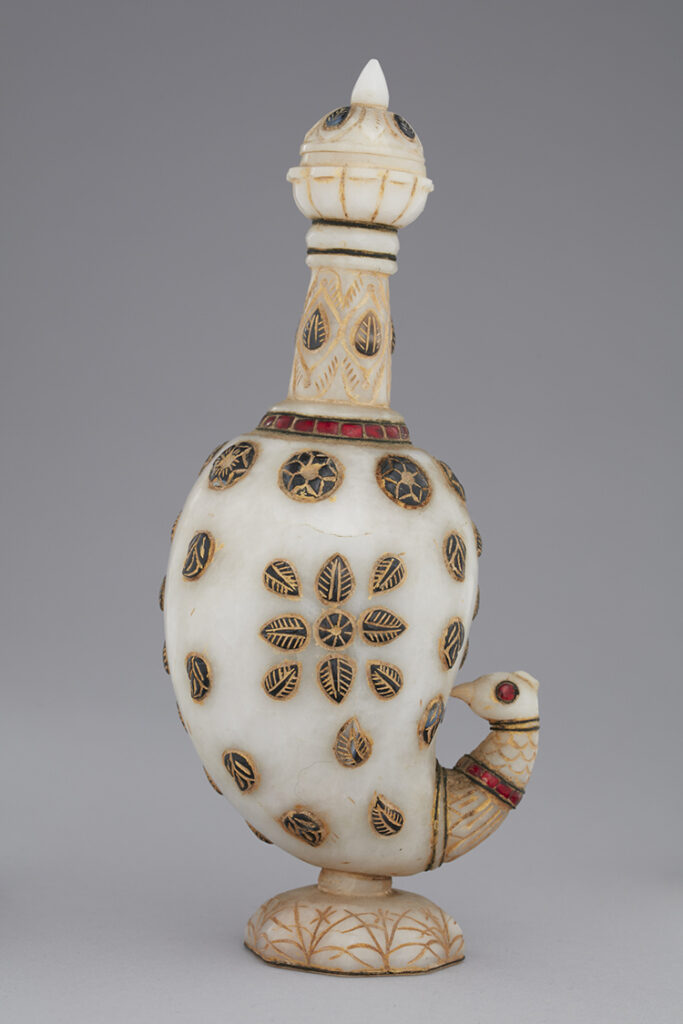
Prestige Floral Powder Flask

OBJ 3125

A prestige powder flask crafted from a finely worked light-colored material, adorned with floral and vegetal motifs enhanced by colored inlays. Its elegant silhouette, resting on a small pedestal, is complemented by a stylized zoomorphic spout and an exquisitely carved stopper. The harmonious decoration, balanced proportions, and meticulous attention to detail reflect the refinement of Oriental decorative arts. Far beyond its practical function, this piece illustrates the taste of the elite for precious objects in which technical mastery is combined with a highly sophisticated aesthetic sensibility.

Estimated date: 19th century

Geographical origin: India or the Mughal world

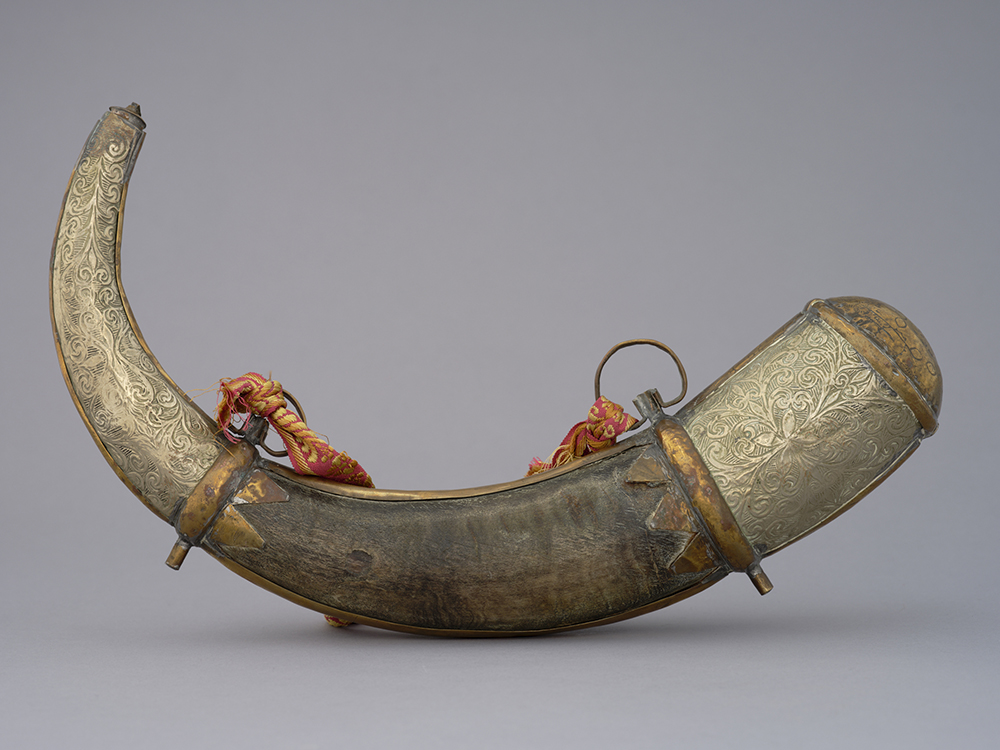
Powder Horn with Engraved Metal Mounts

OBJ 173

Powder horn made from natural horn, fitted with a richly engraved metal spout and reservoir decorated with intertwined vegetal motifs. The elegant curve of the horn is enhanced by finely chased ornamentation, reflecting the refinement of the artisanal traditions associated with the equipment of marksmen. Both a functional accessory and a prestigious object, this powder horn illustrates the care devoted to the decoration of military equipment in various regions of the Islamic world.

Estimated date: 19th century

Geographical origin: Ottoman Empire or the Muslim Balkans

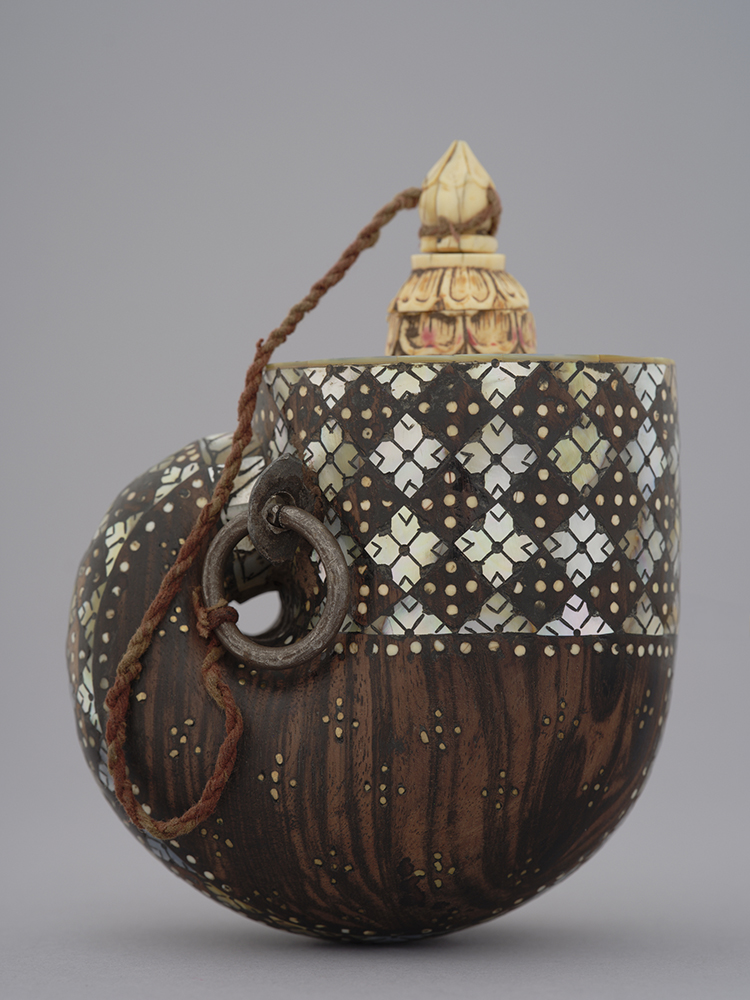
Mother-of-Pearl Inlaid Wooden Powder Flask

OBJ 3146

Powder flask inspired by the shape of a nautilus shell, crafted from wood and richly decorated with mother-of-pearl inlays forming an elegant network of geometric patterns. The contrast between the dark tones of the wood and the iridescent reflections of the mother-of-pearl gives the piece a remarkable sense of refinement. Its carved stopper, suspension ring, and the exceptional quality of its ornamentation reflect the expertise of artisans specializing in the art of inlay. Far beyond its practical function, this object illustrates the taste for prestigious personal accessories.

Estimated date: 19th century

Geographical origin: India

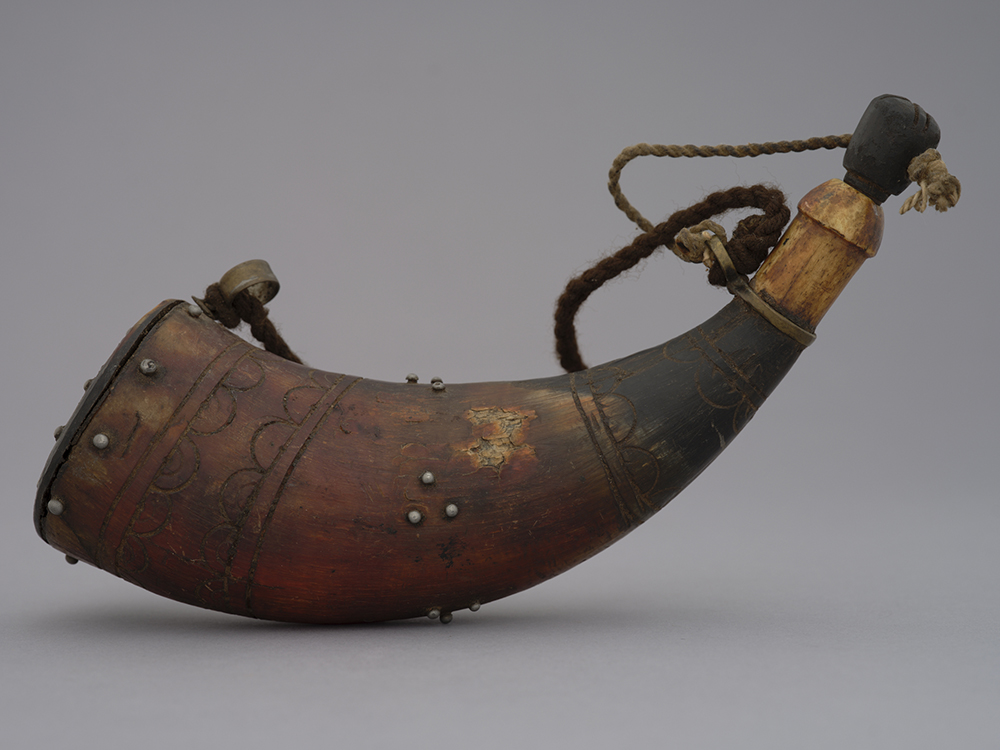
Powder Horn with Engraved Decoration

OBJ 584

Powder horn crafted from natural horn, carefully shaped and decorated with engraved motifs arranged in horizontal registers and highlighted by small metal rivets. Its reinforced spout and suspension system reflect its practical use during travel, while the horn’s warm tones enhance the natural beauty of the material. Both sturdy and elegant, this piece illustrates the craftsmanship involved in transforming animal-derived materials into essential accessories for hunters and marksmen.

Estimated date: 19th century

Geographical origin: North Africa or the Middle East

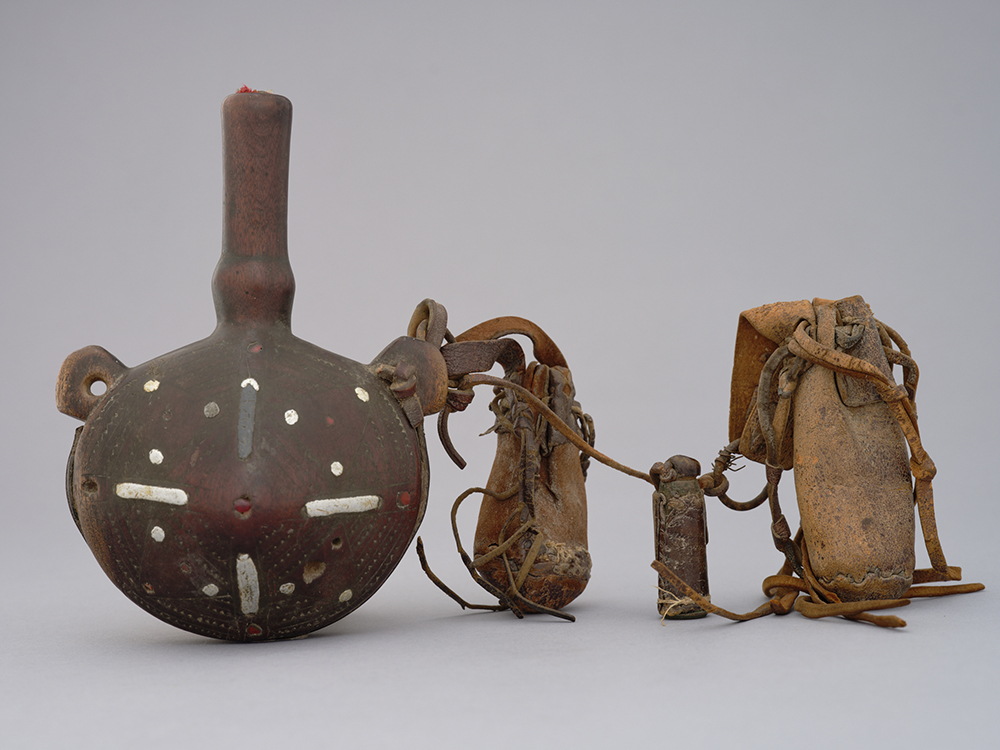
Kabyle Powder Flask with Coral Inlays

OBJ 363

Circular wooden powder flask decorated with metal inlays, red coral beads, and geometric motifs characteristic of Berber craftsmanship. Preserved with its original accessories, including two leather pouches intended for carrying bullets and loading implements, it forms a complete ensemble associated with the use of traditional firearms. The richness of its decoration and the preservation of its accompanying equipment reflect the skill of Kabyle artisans and the importance attached to the aesthetic refinement of personal equipment.

Estimated date: 19th century

Geographical origin: Kabylie, Beni Ouarain region, south of Taza (Morocco)

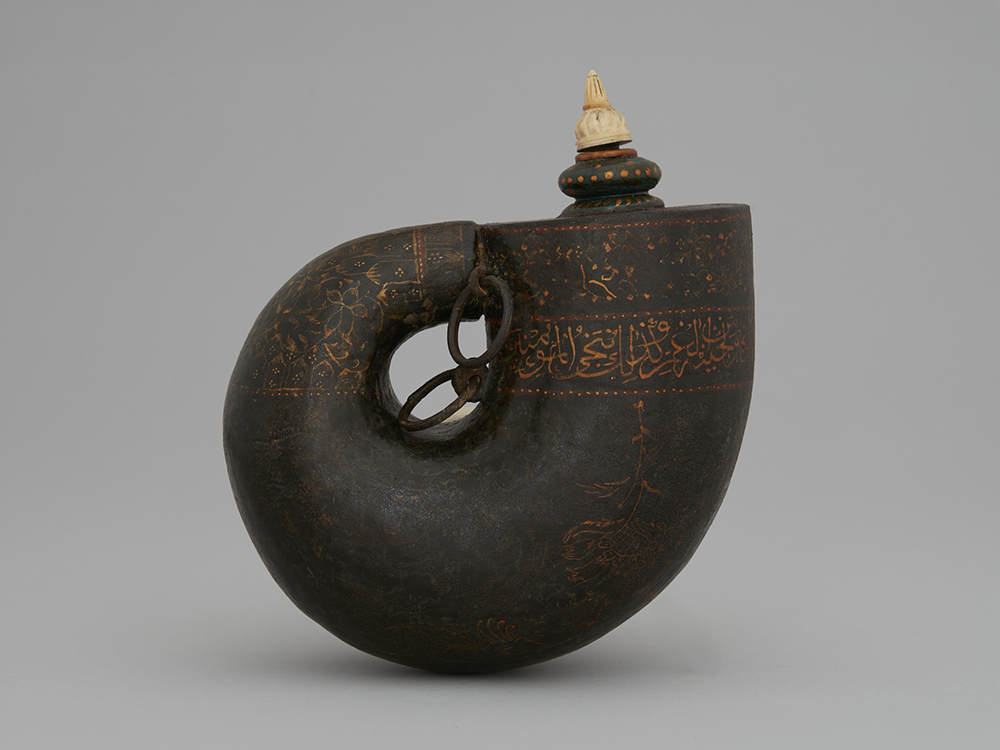
Powder Flask with Calligraphic Inscription

OBJ 3059

Wooden powder flask inspired by the shape of a nautilus shell, decorated with an engraved design combining vegetal motifs and a calligraphic band in Arabic script. The inscription reproduces the supplication of the Prophet Yūnus (Jonah) as it appears in the Qur’an: There is no deity except You. Glory be to You! Indeed, I have been among the wrongdoers,” followed by the divine promise: “Thus do We save the believers” (Qur’an 21:87–88). The delicacy of the calligraphy and the elegance of the composition demonstrate the harmonious integration of sacred text into Islamic decorative arts. Both a functional accessory associated with firearms and a medium of spiritual expression, this object illustrates the meeting of practical utility, devotion, and artistic refinement.

Estimated date: 18th–19th century

Geographical origin: India or the Mughal world

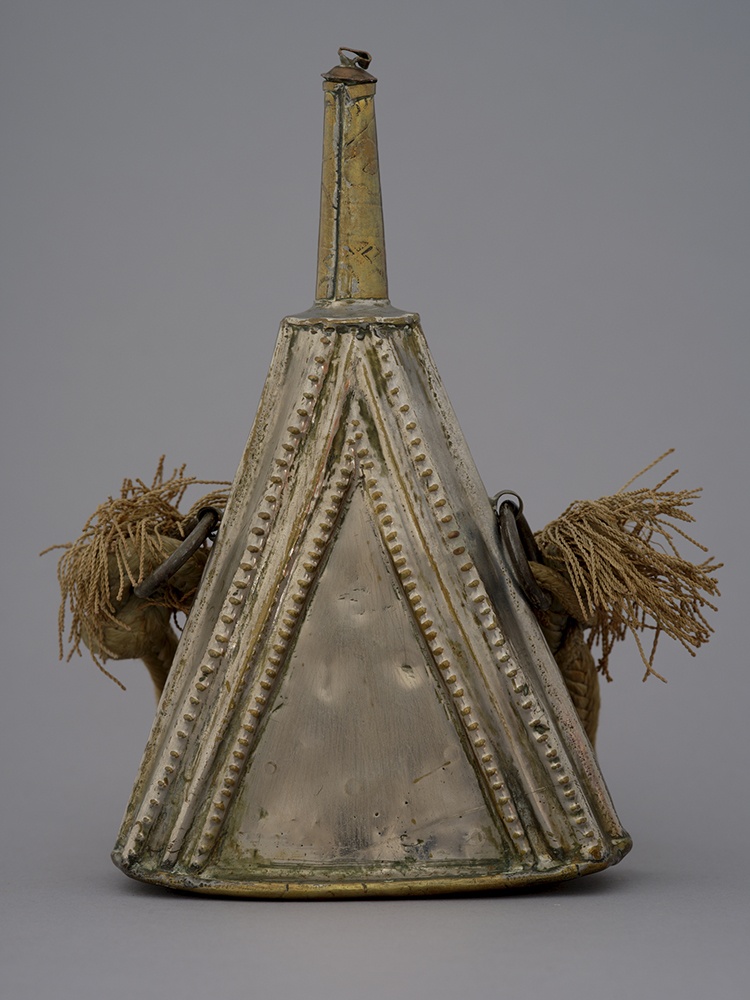
Powder Flask with Triangular Decoration

OBJ 369

Metal powder flask of pyramidal shape, decorated with triangular panels highlighted by rows of small raised ornamental motifs. Its side suspension rings allowed it to be attached to the wearer’s belt or equipment, while its long spout enabled the precise dispensing of black powder. With its unusual geometric silhouette and the restrained elegance of its decoration, this piece illustrates the diversity of forms adopted for firearm accessories in the Muslim world.

Estimated date: 19th century

Geographical origin: North Africa or the Middle East

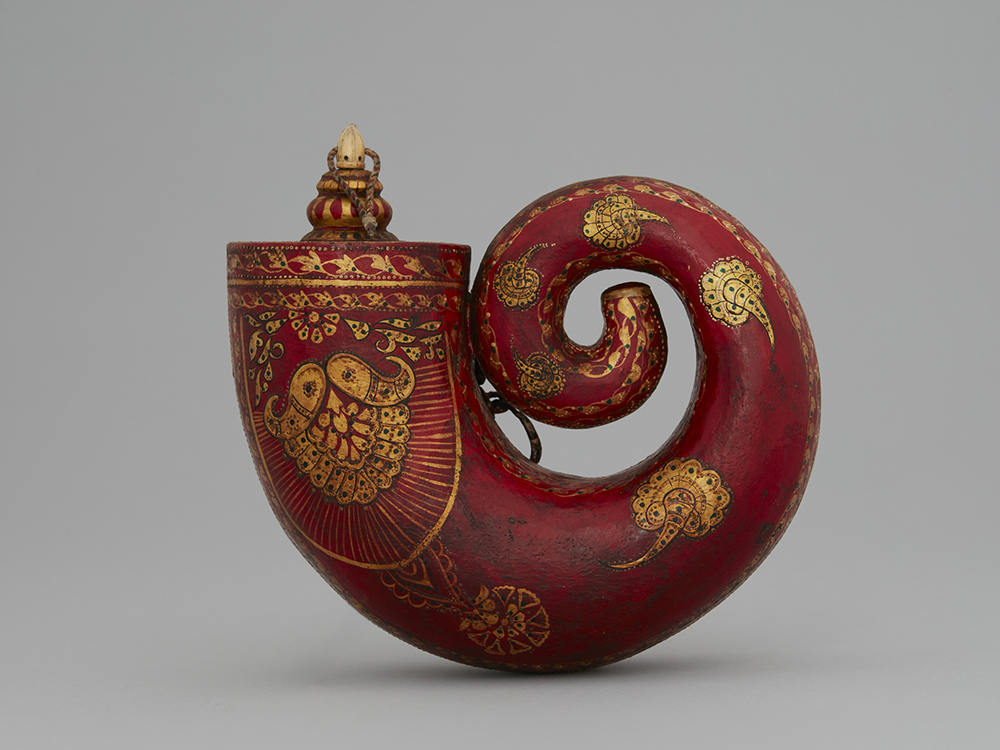
Powder Flask from India

OBJ 3054

Prestige powder flask crafted from lacquered wood, distinguished by its spectacular spiral shape inspired by the nautilus shell. Its red and gold polychrome decoration combines floral motifs, palmettes, and radiant compositions executed with remarkable finesse. The richness of its ornamentation and the originality of its silhouette reflect the refinement of Indian decorative arts, where utilitarian objects were often transformed into true works of art. Designed to hold black powder, this piece illustrates the harmonious blend of functionality, elegance, and technical mastery that characterizes luxury craftsmanship from the Indian subcontinent.

Estimated date: 18th–19th century

Geographical origin: India

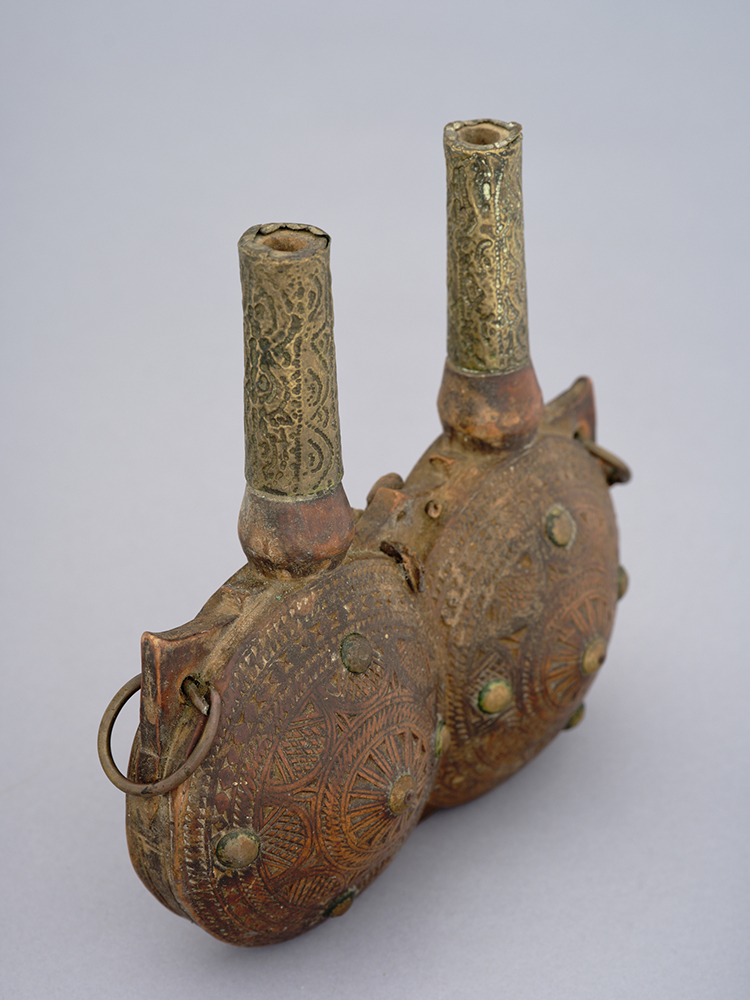
Kabyle Double Powder Flask with Engraved Decoration

OBJ 298

Double powder flask carved from wood, distinguished by its two adjoining reservoirs and finely engraved metal nozzles. Its surface is adorned with a rich geometric and floral decoration featuring rosettes, radiating motifs, and incised friezes, reflecting the exceptional craftsmanship of Kabyle artisans. This relatively rare double-compartment design demonstrates the ingenuity of traditional firearm accessories. Both a functional object and a work of folk art, it illustrates the richness of nineteenth-century Algerian artisanal traditions.

Estimated date: 19th century

Geographical origin: Kabylia, Algeria

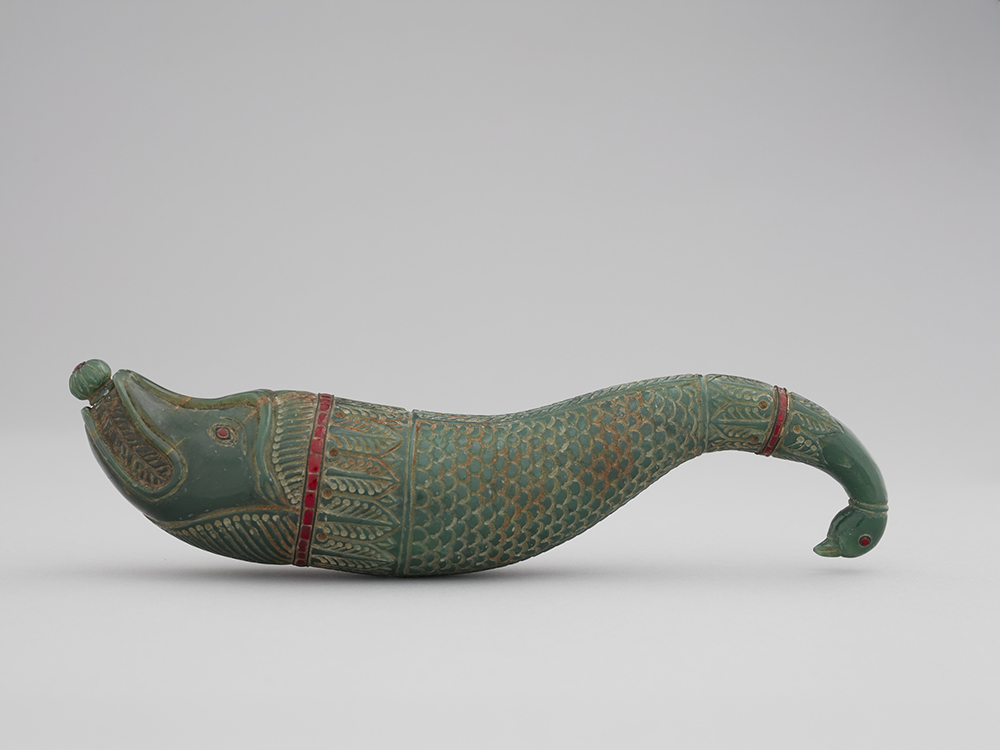
Zoomorphic Powder Flask in the Shape of a Fish and a Bird

OBJ 3111

Powder flask carved in an original zoomorphic form combining the features of a fish and a bird. Its body, covered with stylized scales, finely engraved details, and colorful inlays, reflects remarkable decorative craftsmanship in which the artisan’s imagination is harmoniously combined with the object’s practical function. The sinuous and expressive silhouette distinguishes this piece from traditional horn or wooden powder flasks, illustrating the wide variety of forms adopted for firearm accessories. Beyond its practical purpose, this powder flask is a true work of folk art, drawing inspiration and symbolism from the animal world.

Estimated date: 18th–19th century

Geographical origin: India or Central Asia

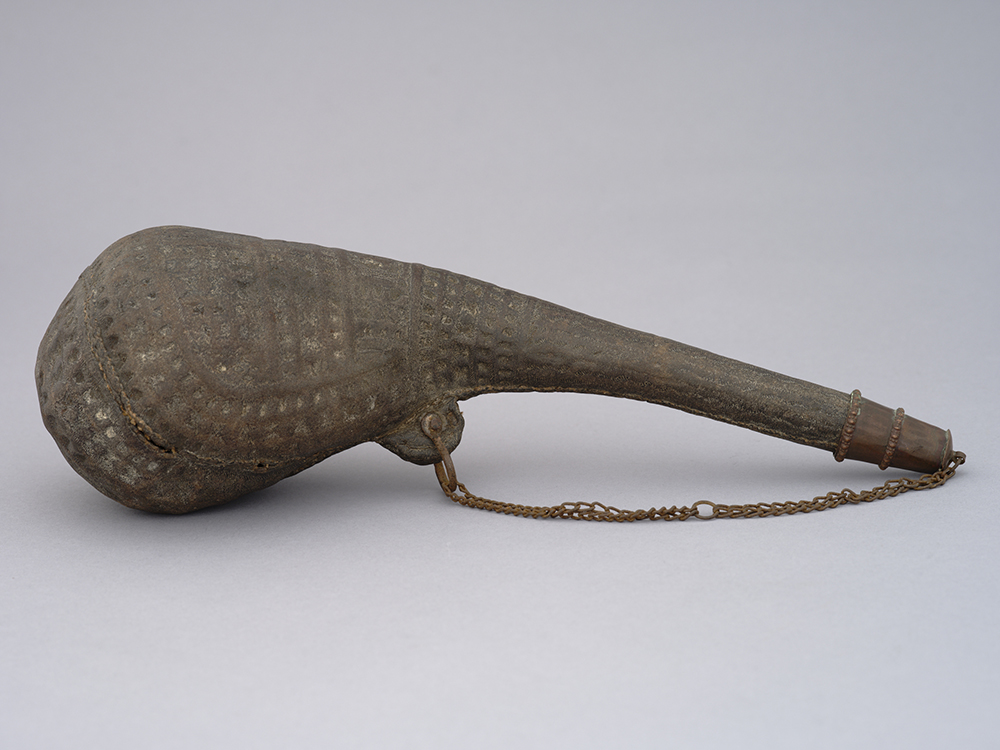
Embossed Leather Powder Flask

OBJ 370

Elongated leather powder flask decorated with an embossed pattern of geometric bands and dotted motifs covering its entire surface. Its long neck, fitted with a metal spout, allowed for the precise dispensing of black powder, while the retaining chain helped secure the stopper and preserve the contents. The understated richness of its decoration and the high quality of its leather craftsmanship reflect the expertise of the artisans who produced these essential accessories for hunters and marksmen.

Estimated date: 19th century

Geographical origin: North Africa or the Middle East

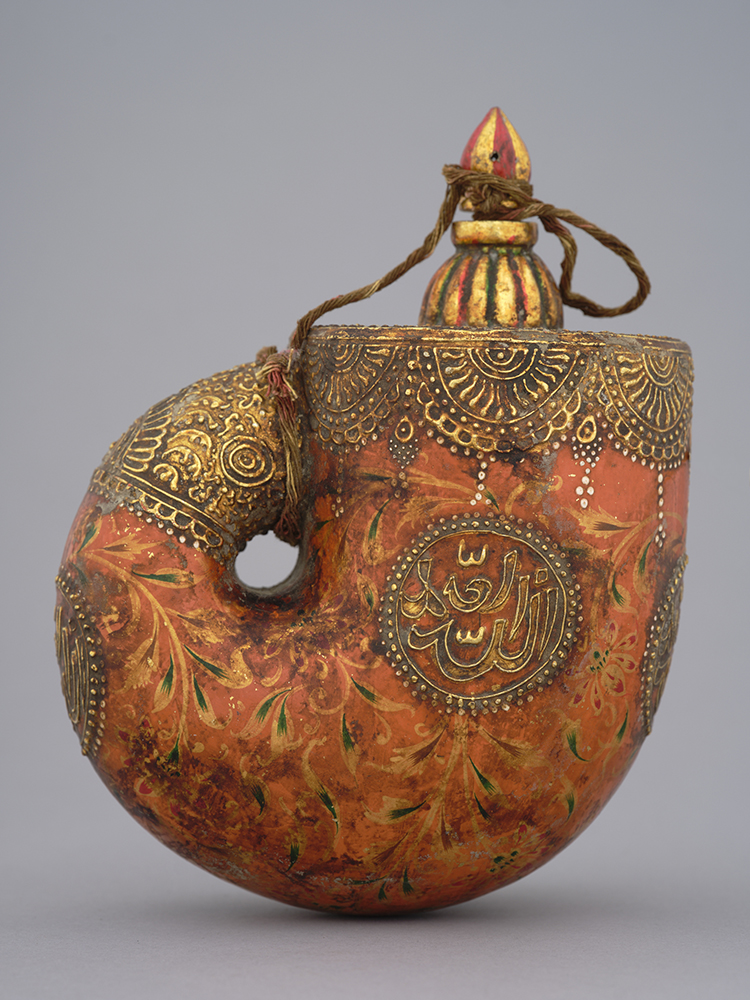
Mughal Lacquered Wooden Powder Flask with Floral Decoration

OBJ 3145

Powder flask inspired by the shape of a nautilus shell, crafted from lacquered wood and adorned with an elaborate painted decoration combining floral motifs, gilded elements, and a calligraphic medallion bearing the divine name “Allah.” The refinement of its ornamentation, the vibrancy of its colors, and the elegance of its silhouette reflect the sophistication of the decorative arts developed under the Mughal rulers. Designed to hold black powder, this object transcends its practical function to become a true prestige piece, illustrating the harmonious blend of technical craftsmanship, luxury, and artistic expression.

Estimated date: 18th–19th century

Geographical origin: Mughal Empire (India)
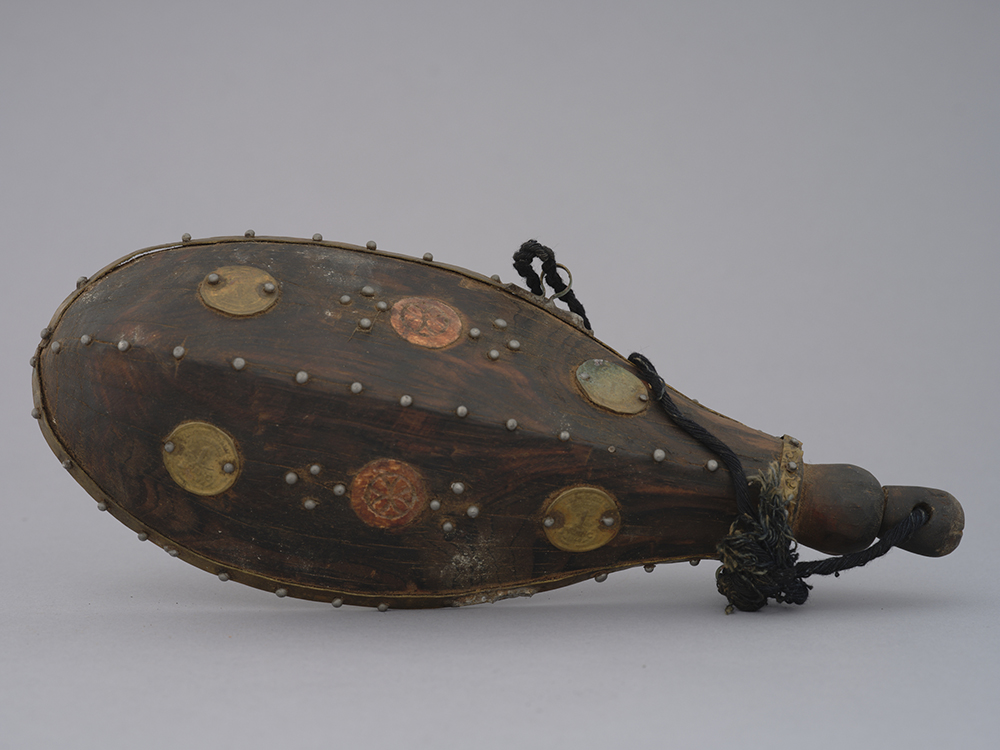
Powder Flask with Metal Decoration

OBJ 146

Pear-shaped wooden powder flask decorated with metal studs and rows of rivets arranged in a balanced ornamental composition. Its turned stopper and suspension system reflect its use for carrying and dispensing black powder. The combination of dark wood and metal elements gives the object a distinctive elegance, illustrating the craftsmanship of artisans who transformed military accessories into objects that were both functional and decorative.

Estimated date: 19th century

Geographical origin: North Africa

Legal Information

Intellectual Property

All content available on this website, including but not limited to texts, photographs, manuscripts, images, illustrations, videos, digitized documents, logos, databases, graphic elements, and other materials, is protected under Swiss and international copyright and intellectual property laws.

Except with the prior written authorization of the ADLANIA Foundation or the relevant rights holders, any reproduction, representation, distribution, adaptation, or exploitation, whether in whole or in part, of this content, by any means or on any medium whatsoever, is prohibited.

The reproductions of the works and documents presented on this website are made available exclusively for purposes of preservation, research, scientific, cultural, and heritage enhancement.

Collections and Archives

The manuscripts, documents, photographs, heritage objects, works of art, and other collections presented on this website are owned by the ADLANIA Foundation or are reproduced with the authorization of their owners or rights holders.

The manuscripts, documents, photographs, heritage objects, works, and other collections presented on this website are owned by the ADLANIA Foundation or are reproduced with the authorization of their owners or rights holders.

Collection Photographs

The photographs of the manuscripts, objects, works of art, and other heritage items presented on this website were taken by photographer Abdou Diouri as part of his collaboration with the ADLANIA Foundation.

These photographs are protected by copyright.

Any reproduction, display, distribution, modification, or use, whether in whole or in part and in any form whatsoever, is prohibited without the prior written authorization of the ADLANIA Foundation and, where applicable, the relevant rights holders.

Privacy Policy

The ADLANIA Foundation is committed to protecting the personal data of visitors to this website. The information collected through contact forms, information requests, registrations, or orders is used exclusively to respond to users' inquiries, manage communications, process orders, and improve the services provided.

Personal data is neither sold, rented, nor disclosed to third parties, except where required by law or when necessary for the provision of a service requested by the user.

In accordance with applicable data protection legislation, each user has the right to access, rectify, erase, restrict the processing of, and, where applicable, object to the processing of their personal data.

Any request may be addressed to the ADLANIA Foundation using the contact details provided on the website.

Cookie Policy

This website uses cookies to ensure its proper functioning, enhance the browsing experience, and, where applicable, measure website traffic.

Strictly necessary cookies required for the operation of the website are placed automatically. Other categories of cookies, including those used for audience measurement or provided by third-party services, are only used after the user's consent has been obtained, where required by applicable law.

The user may, at any time, manage or withdraw their consent through their browser settings or via the cookie consent manager, where available.

Legal Information

Intellectual Property

All content available on this website, including but not limited to texts, photographs, manuscripts, images, illustrations, videos, digitized documents, logos, databases, graphic elements, and other materials, is protected under Swiss and international copyright and intellectual property laws.

Except with the prior written authorization of the ADLANIA Foundation or the relevant rights holders, any reproduction, representation, distribution, adaptation, or exploitation, whether in whole or in part, of this content, by any means or on any medium whatsoever, is prohibited.

The reproductions of the works and documents presented on this website are made available exclusively for purposes of preservation, research, scientific, cultural, and heritage enhancement.

Collections and Archives

The manuscripts, documents, photographs, heritage objects, works of art, and other collections presented on this website are owned by the ADLANIA Foundation or are reproduced with the authorization of their owners or rights holders.

The manuscripts, documents, photographs, heritage objects, works, and other collections presented on this website are owned by the ADLANIA Foundation or are reproduced with the authorization of their owners or rights holders.

Collection Photographs

The photographs of the manuscripts, objects, works of art, and other heritage items presented on this website were taken by photographer Abdou Diouri as part of his collaboration with the ADLANIA Foundation.

These photographs are protected by copyright.

Any reproduction, display, distribution, modification, or use, whether in whole or in part and in any form whatsoever, is prohibited without the prior written authorization of the ADLANIA Foundation and, where applicable, the relevant rights holders.

Privacy Policy

The ADLANIA Foundation is committed to protecting the personal data of visitors to this website. The information collected through contact forms, information requests, registrations, or orders is used exclusively to respond to users' inquiries, manage communications, process orders, and improve the services provided.

Personal data is neither sold, rented, nor disclosed to third parties, except where required by law or when necessary for the provision of a service requested by the user.

In accordance with applicable data protection legislation, each user has the right to access, rectify, erase, restrict the processing of, and, where applicable, object to the processing of their personal data.

Any request may be addressed to the ADLANIA Foundation using the contact details provided on the website.

Cookie Policy

This website uses cookies to ensure its proper functioning, enhance the browsing experience, and, where applicable, measure website traffic.

Strictly necessary cookies required for the operation of the website are placed automatically. Other categories of cookies, including those used for audience measurement or provided by third-party services, are only used after the user's consent has been obtained, where required by applicable law.

The user may, at any time, manage or withdraw their consent through their browser settings or via the cookie consent manager, where available.