Water Flasks

Water Flasks have played an important role in the daily lives of societies throughout the Muslim world. Designed to carry and preserve water and other liquids, they reflect both the practical needs of travelers, pilgrims, and nomadic communities, as well as the craftsmanship of the artisans who created them.

The ADLANIA Foundation’s collection of flasks brings together objects from different regions and historical periods, crafted from metal, ceramic, glass, leather, and natural materials. Their diverse shapes, engraved, painted, or chased decorations, and manufacturing techniques illustrate the richness of the artisanal traditions and material cultures of the Islamic world.

Through this selection, the ADLANIA Foundation seeks to highlight a heritage closely linked to everyday life, travel, exchange, and the lifestyles of past societies, while contributing to the preservation and promotion of this valuable cultural legacy.

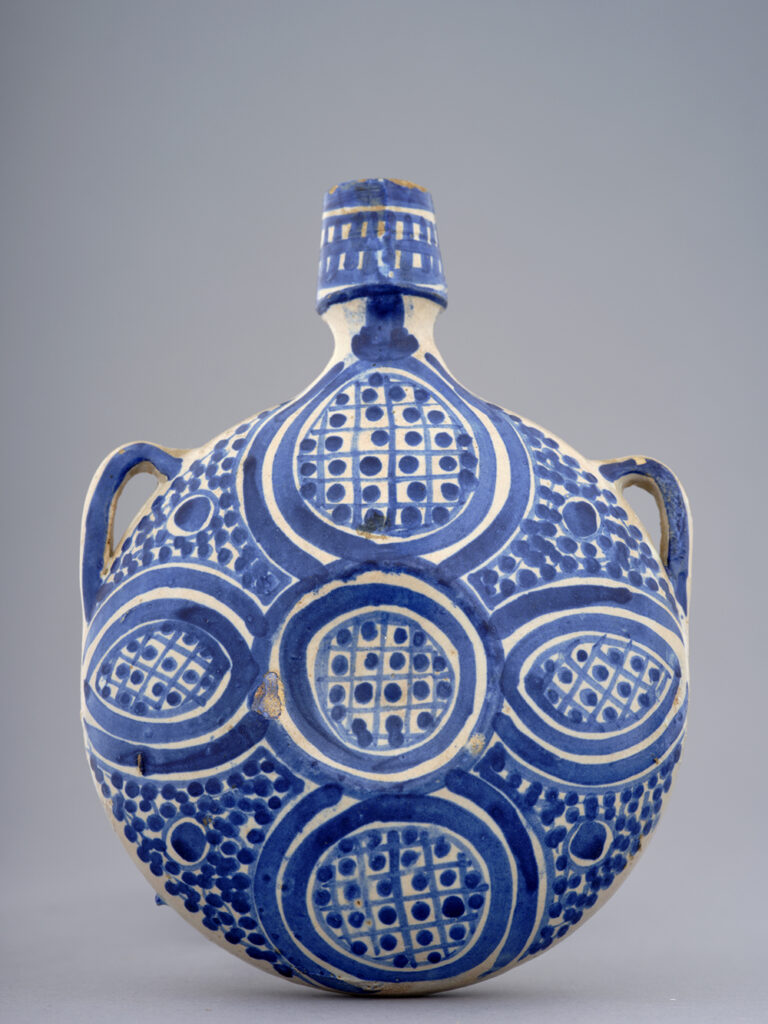
Blue and White Decorated Ceramic Flask

OBJ 2273

Glazed ceramic flask decorated with cobalt blue painted motifs on a light-colored background. Its design combines geometric patterns, concentric circles, and stylized decorative elements characteristic of certain North African ceramic traditions. The two side handles allowed it to be carried or suspended, while its ornamentation reflects the importance placed on the aesthetic quality of everyday objects.

Estimated date: 19th century

Geographical origin: North Africa
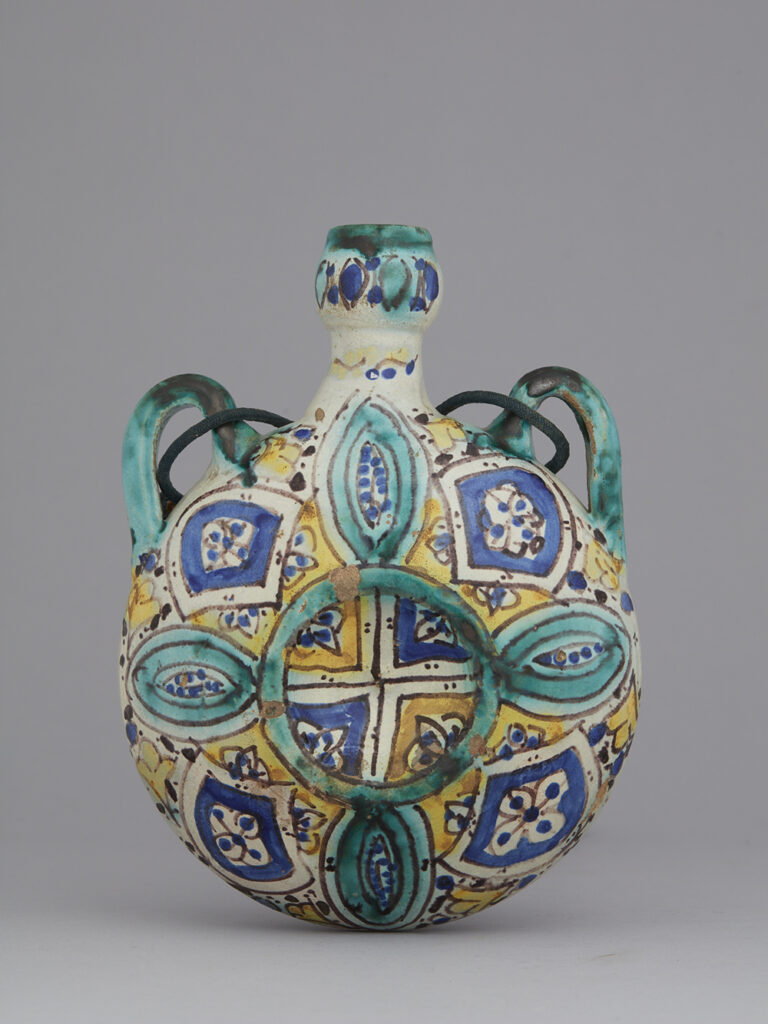
Moroccan Polychrome Ceramic Qar’a

OBJ 2272

Glazed earthenware qar’a decorated with a polychrome design featuring shades of blue, green, yellow, and white.
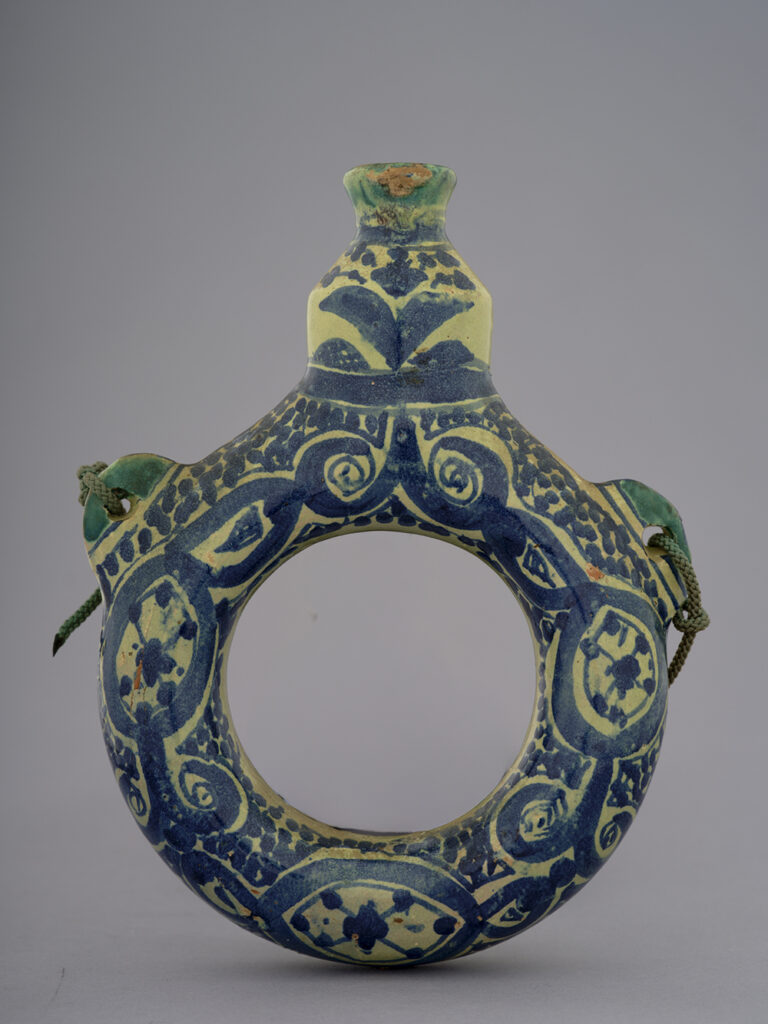
Its surface is adorned with geometric compositions and stylized motifs arranged around an openwork central medallion. Two lateral handles facilitate suspension, while the brilliance of its colors reflects the craftsmanship of Moroccan ceramic workshops. Both functional and decorative, this piece illustrates the richness of Morocco’s traditional artisanal heritage.

Estimated date: 19th century

Geographical origin: Morocco

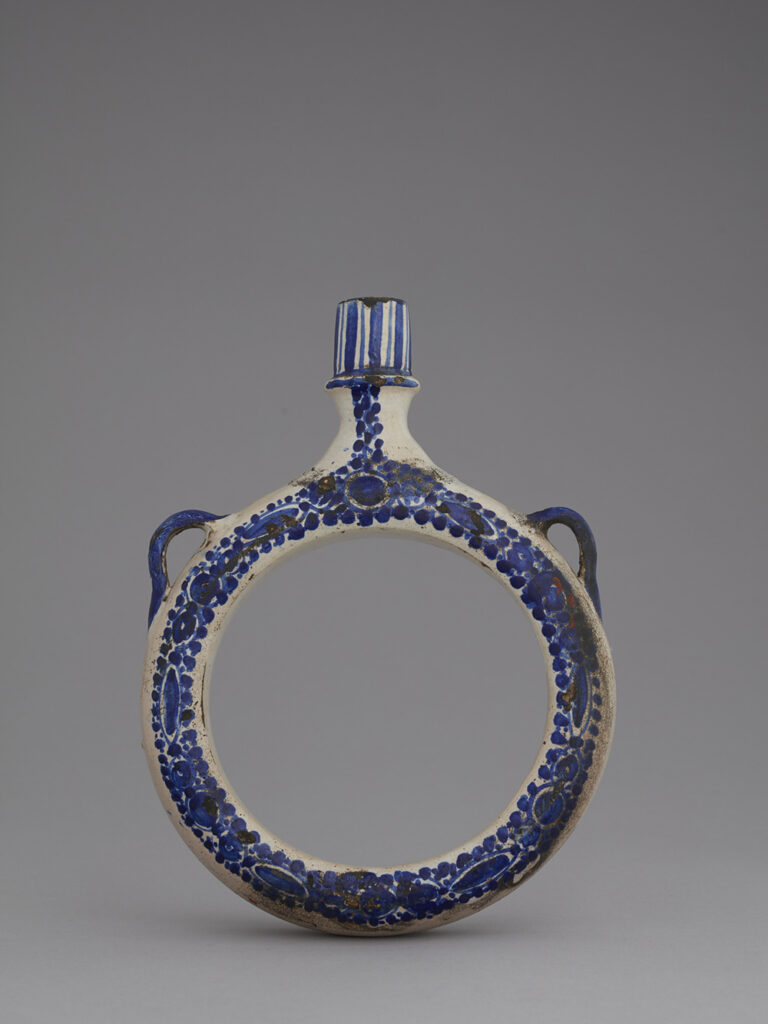
Ring-Shaped Ceramic Flask from Fez

OBJ 3132

Ring-shaped glazed earthenware flask, decorated with a delicate hand-painted cobalt blue motif. Its refined silhouette highlights the elegance of its circular form, while its stylized floral decoration enhances the harmony and sophistication of the design. Produced in the workshops of Fez, it reflects the richness of Moroccan ceramic traditions and the importance of objects associated with travel and pilgrimage in the cultural exchanges of the Muslim world.

Estimated date: 18th century.

Geographical origin: Fez, Morocco

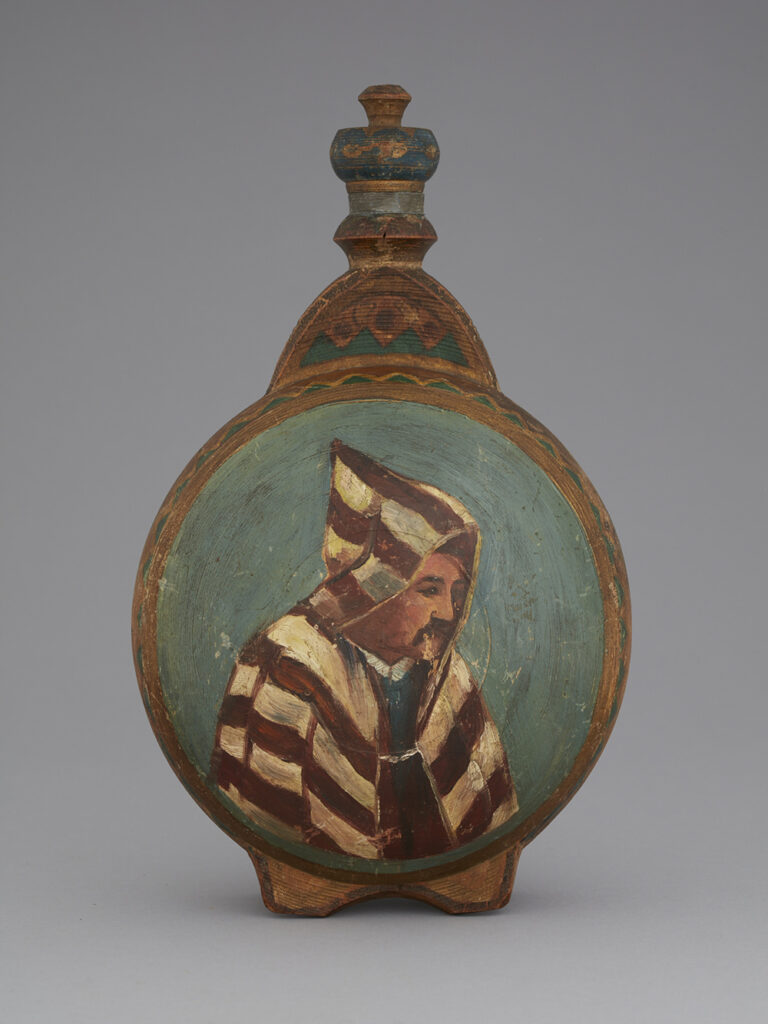
Pilgrim’s Flask with Figurative Decoration

OBJ 2297

Wooden flask painted with the figure of a person wearing a traditional striped burnous. This figurative decoration, rare on travel containers, gives the object a narrative dimension and reflects the influence of Moroccan folk traditions on the decorative arts. Preserved as a keepsake or devotional object, it evokes the journeys, encounters, and cultural exchanges that accompanied pilgrimage routes.

Estimated date: 19th – early 20th century

Geographic origin: Morocco

Ring-Shaped Pilgrimage Flask in Fès Ceramic

OBJ 3798

Ring-shaped glazed earthenware flask, decorated with a hand-painted cobalt blue design combining vegetal motifs, scrolls, and geometric compositions. Its side loops allowed it to be suspended during travel or pilgrimage. Produced in the workshops of Fès, it reflects the craftsmanship of Moroccan potters and the widespread distribution of vessels used to carry Zamzam water throughout the Muslim world.

Estimated date: 18th–19th century

Geographical origin: Fez, Morocco

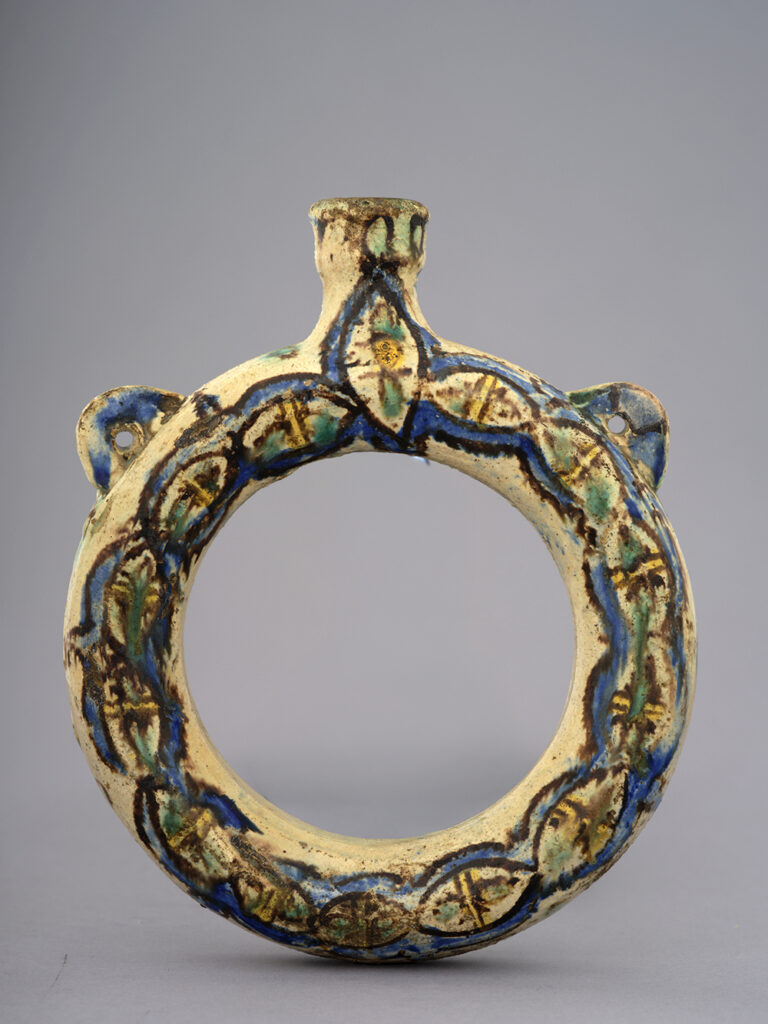
Pilgrim’s Zamzam Ring Flask

OBJ 3797

Ring-shaped glazed earthenware flask, decorated with a polychrome design dominated by the blue, green, and yellow tones characteristic of the ceramic productions of Fez. Its open circular form, fitted with two lateral suspension loops, made it easy to carry during travel. Associated with the storage and transport of Zamzam water, it reflects pilgrimage practices and the circulation of devotional objects throughout the Muslim world.

Estimated date: 18th century.

Geographical origin: Fez, Morocco

Blue and White Decorated Ceramic Flask

OBJ 2273

Glazed ceramic flask decorated with cobalt blue painted motifs on a light-colored background. Its design combines geometric patterns, concentric circles, and stylized decorative elements characteristic of certain North African ceramic traditions. The two side handles allowed it to be carried or suspended, while its ornamentation reflects the importance placed on the aesthetic quality of everyday objects.

Estimated date: 19th century

Geographical origin: North Africa
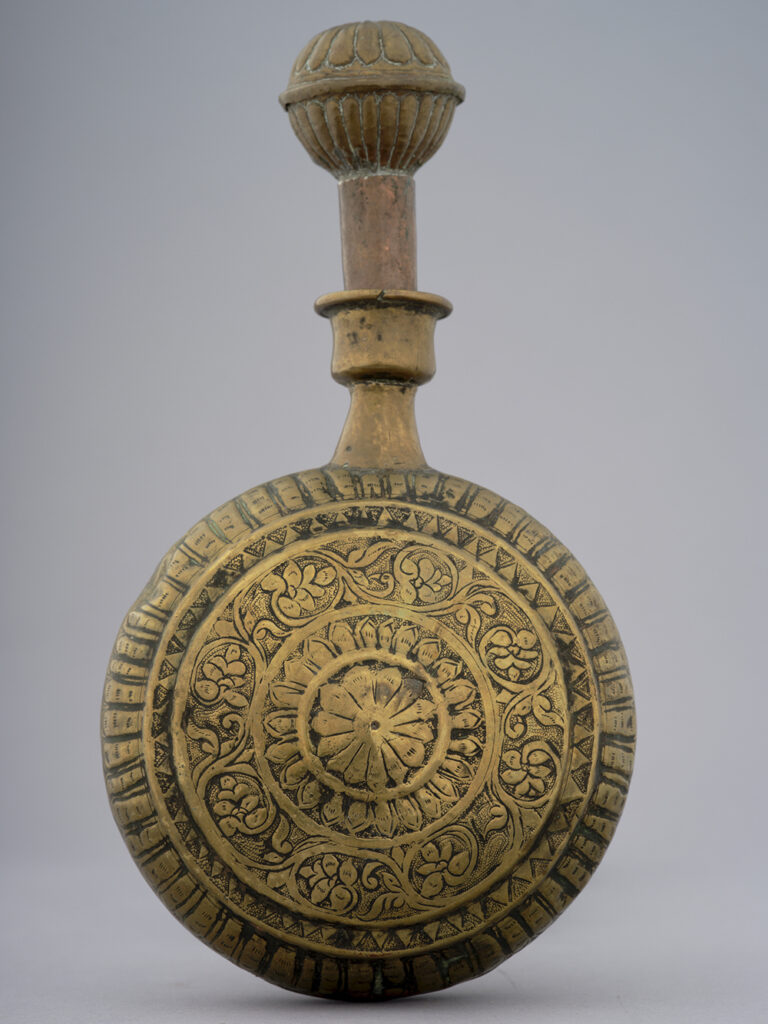
Brass Flask with Central Rosette

OBJ 2223

Circular brass flask decorated with an engraved design centered on a rosette, surrounded by stylized floral motifs and geometric borders. The harmony of its composition reflects a careful pursuit of balance and symmetry, characteristic of many traditional crafts of the Muslim world. Its elegant fluted stopper completes the refined aesthetic of the piece.

Estimated date: 19th century

Geographical origin: Persia, India, or Central Asia

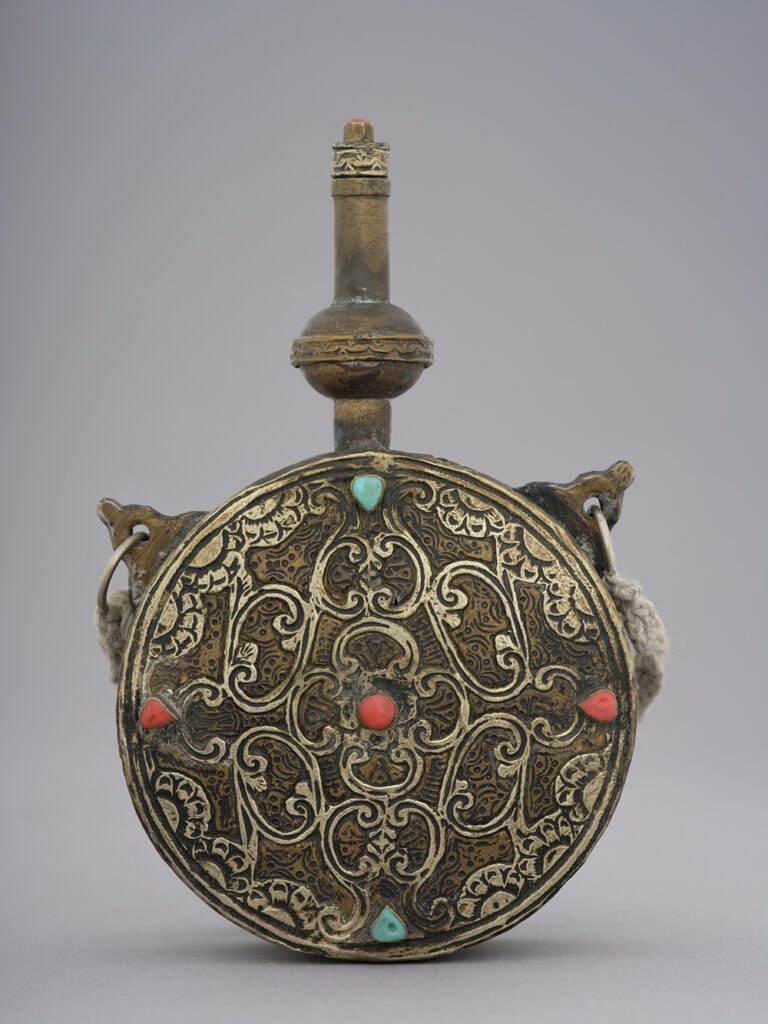
Metal Flask with Arabesque Decoration

OBJ 1217

A circular metal flask adorned with an intricate pattern of interlaced arabesques enhanced by colorful inlays. The refinement of its composition and the balance of its decorative motifs reflect the appreciation for geometric and vegetal ornamentation in the decorative arts of the Muslim world. Fitted with suspension rings, it could be carried during travel while also serving as a symbol of aesthetic prestige.

Estimated date: 19th – early 20th century

Geographical origin: Central Asia, Persia, or Afghanistan

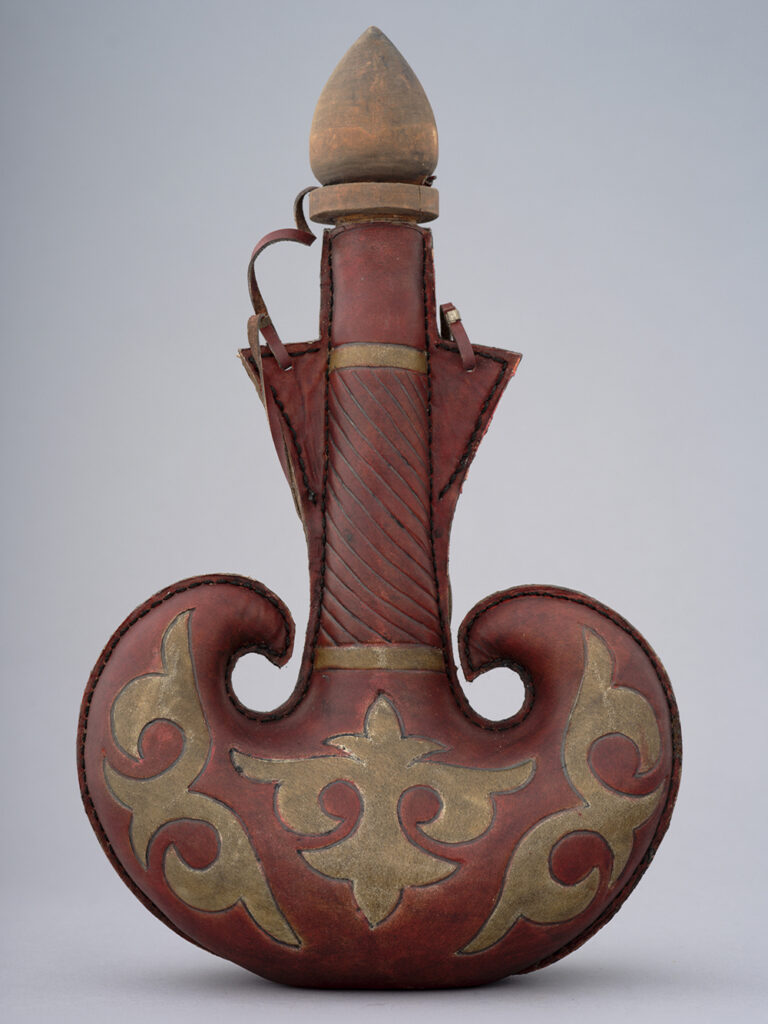
Traditional Decorated Zamzam Water Flask

OBJ 1011

A Zamzam water flask covered in red leather and adorned with stylized vegetal motifs arranged in symmetrical patterns. Its distinctive shape, combining a flared body with a long cylindrical neck, evokes the objects brought back from the pilgrimage and preserved as devotional souvenirs. It illustrates the diversity of forms and decorative styles developed for containers intended to hold the sacred water of Zamzam.

Estimated date: 20th century

Geographical origin: Arabian Peninsula or Middle East

Zamzam Flask with Engraved Floral Decoration

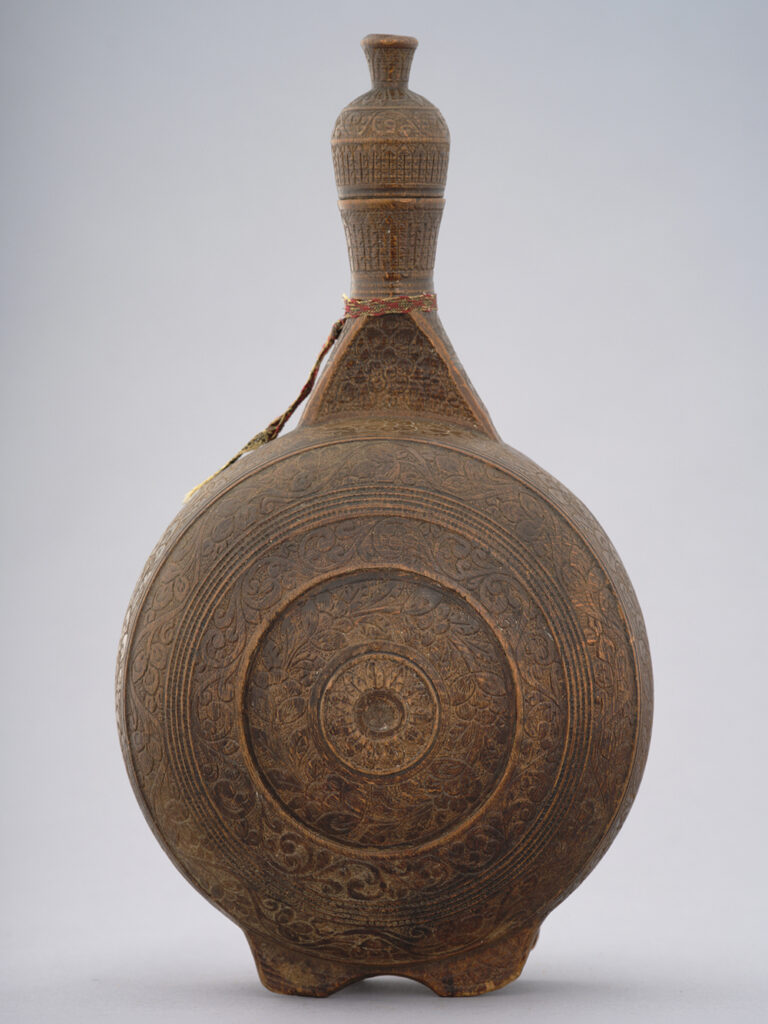
OBJ 491

Large wooden flask decorated with an engraved design featuring rosettes, floral motifs, and vegetal friezes. Associated with the storage or transport of Zamzam water, it reflects the significance of pilgrimage practices and the circulation of devotional objects throughout the Muslim world. Its richly engraved decoration illustrates the refinement of Persian craftsmanship.

Estimated date: 19th century

Geographical origin: Persia (Iran)

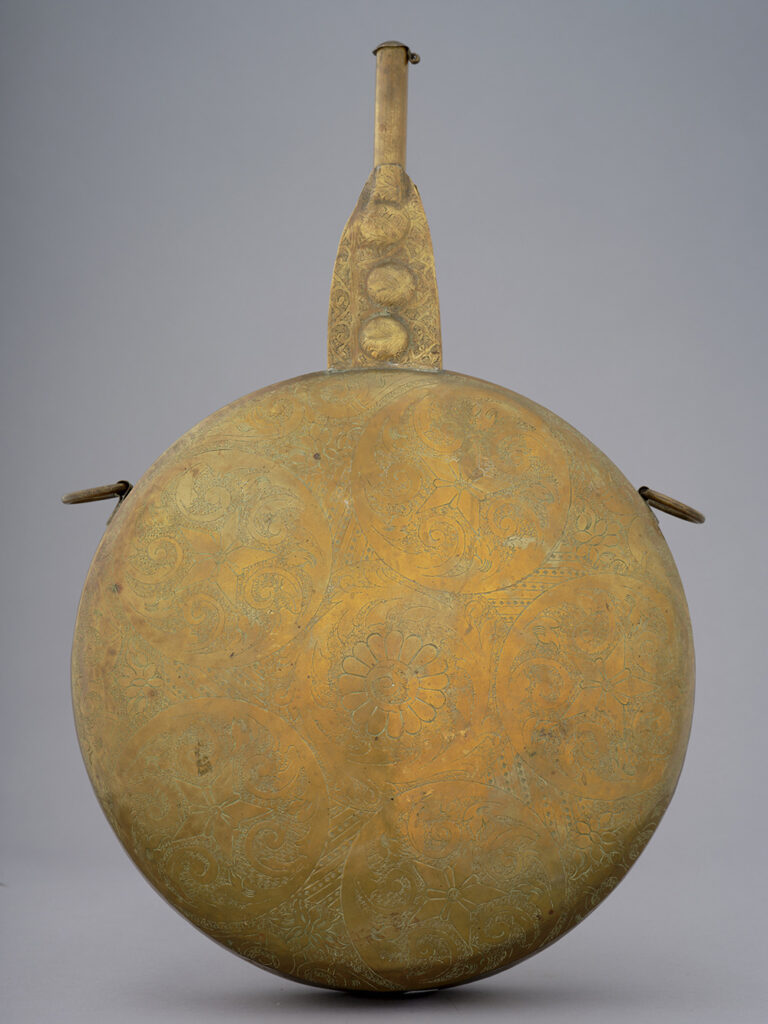
Circular Engraved Brass Flask

OBJ 482

Circular brass flask, richly decorated with engraved floral and vegetal motifs. Its ornamentation reflects the craftsmanship of metal artisans and the care devoted to the aesthetic refinement of everyday objects. Both functional and decorative, it illustrates the importance of artistic craftsmanship in the societies of the Muslim world.

Estimated date: 19th century

Geographical origin: India, Persia, or the Ottoman Empire

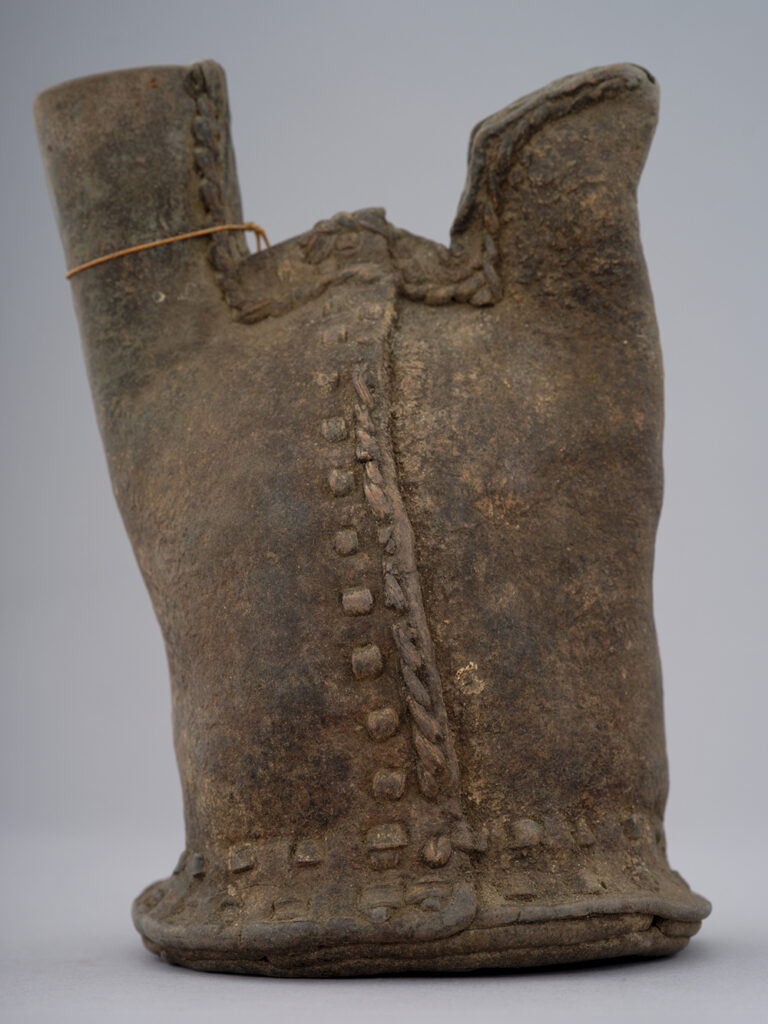
Traditional Stitched Water Container

OBJ 195

Traditional water container made from assembled organic material, distinguished by its visible stitching and elongated shape. Designed for carrying water during travel, it reflects the traditional craftsmanship developed in regions where the management of water resources played a vital role in everyday life.

Estimated date: 19th – early 20th century

Geographical origin: North Africa or the Sahara
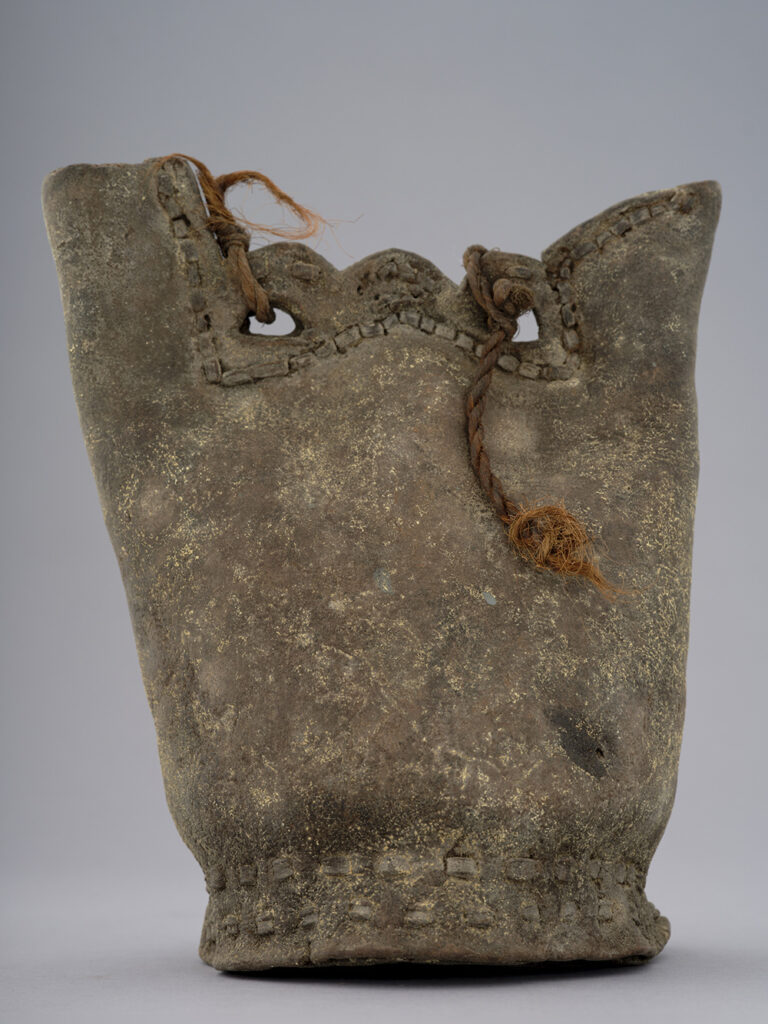
Travel Stitched Leather Waterskin

OBJ 194

Flexible waterskin made of stitched leather, fitted with straps for carrying or hanging. Its practical shape and durable construction reflect its use during travel, caravans, and pastoral life in arid regions.

Estimated date: 19th – early 20th century

Geographical origin: North Africa or the Sahara
Legal Information

Intellectual Property

All content available on this website, including but not limited to texts, photographs, manuscripts, images, illustrations, videos, digitized documents, logos, databases, graphic elements, and other materials, is protected under Swiss and international copyright and intellectual property laws.

Except with the prior written authorization of the ADLANIA Foundation or the relevant rights holders, any reproduction, representation, distribution, adaptation, or exploitation, whether in whole or in part, of this content, by any means or on any medium whatsoever, is prohibited.

The reproductions of the works and documents presented on this website are made available exclusively for purposes of preservation, research, scientific, cultural, and heritage enhancement.

Collections and Archives

The manuscripts, documents, photographs, heritage objects, works of art, and other collections presented on this website are owned by the ADLANIA Foundation or are reproduced with the authorization of their owners or rights holders.

The manuscripts, documents, photographs, heritage objects, works, and other collections presented on this website are owned by the ADLANIA Foundation or are reproduced with the authorization of their owners or rights holders.

Collection Photographs

The photographs of the manuscripts, objects, works of art, and other heritage items presented on this website were taken by photographer Abdou Diouri as part of his collaboration with the ADLANIA Foundation.

These photographs are protected by copyright.

Any reproduction, display, distribution, modification, or use, whether in whole or in part and in any form whatsoever, is prohibited without the prior written authorization of the ADLANIA Foundation and, where applicable, the relevant rights holders.

Privacy Policy

The ADLANIA Foundation is committed to protecting the personal data of visitors to this website. The information collected through contact forms, information requests, registrations, or orders is used exclusively to respond to users' inquiries, manage communications, process orders, and improve the services provided.

Personal data is neither sold, rented, nor disclosed to third parties, except where required by law or when necessary for the provision of a service requested by the user.

In accordance with applicable data protection legislation, each user has the right to access, rectify, erase, restrict the processing of, and, where applicable, object to the processing of their personal data.

Any request may be addressed to the ADLANIA Foundation using the contact details provided on the website.

Cookie Policy

This website uses cookies to ensure its proper functioning, enhance the browsing experience, and, where applicable, measure website traffic.

Strictly necessary cookies required for the operation of the website are placed automatically. Other categories of cookies, including those used for audience measurement or provided by third-party services, are only used after the user's consent has been obtained, where required by applicable law.

The user may, at any time, manage or withdraw their consent through their browser settings or via the cookie consent manager, where available.

Legal Information

Intellectual Property

All content available on this website, including but not limited to texts, photographs, manuscripts, images, illustrations, videos, digitized documents, logos, databases, graphic elements, and other materials, is protected under Swiss and international copyright and intellectual property laws.

Except with the prior written authorization of the ADLANIA Foundation or the relevant rights holders, any reproduction, representation, distribution, adaptation, or exploitation, whether in whole or in part, of this content, by any means or on any medium whatsoever, is prohibited.

The reproductions of the works and documents presented on this website are made available exclusively for purposes of preservation, research, scientific, cultural, and heritage enhancement.

Collections and Archives

The manuscripts, documents, photographs, heritage objects, works of art, and other collections presented on this website are owned by the ADLANIA Foundation or are reproduced with the authorization of their owners or rights holders.

The manuscripts, documents, photographs, heritage objects, works, and other collections presented on this website are owned by the ADLANIA Foundation or are reproduced with the authorization of their owners or rights holders.

Collection Photographs

The photographs of the manuscripts, objects, works of art, and other heritage items presented on this website were taken by photographer Abdou Diouri as part of his collaboration with the ADLANIA Foundation.

These photographs are protected by copyright.

Any reproduction, display, distribution, modification, or use, whether in whole or in part and in any form whatsoever, is prohibited without the prior written authorization of the ADLANIA Foundation and, where applicable, the relevant rights holders.

Privacy Policy

The ADLANIA Foundation is committed to protecting the personal data of visitors to this website. The information collected through contact forms, information requests, registrations, or orders is used exclusively to respond to users' inquiries, manage communications, process orders, and improve the services provided.

Personal data is neither sold, rented, nor disclosed to third parties, except where required by law or when necessary for the provision of a service requested by the user.

In accordance with applicable data protection legislation, each user has the right to access, rectify, erase, restrict the processing of, and, where applicable, object to the processing of their personal data.

Any request may be addressed to the ADLANIA Foundation using the contact details provided on the website.

Cookie Policy

This website uses cookies to ensure its proper functioning, enhance the browsing experience, and, where applicable, measure website traffic.

Strictly necessary cookies required for the operation of the website are placed automatically. Other categories of cookies, including those used for audience measurement or provided by third-party services, are only used after the user's consent has been obtained, where required by applicable law.

The user may, at any time, manage or withdraw their consent through their browser settings or via the cookie consent manager, where available.