Holy Sites

The holy sites occupy a central place in the spiritual memory and religious imagination of Muslims. For centuries, artists, calligraphers, engravers, and printers have depicted Islam’s most revered sanctuaries, preserving the memory of the places associated with Revelation, the Prophet Muhammad ﷺ, and the pilgrimage.

The Fondation ADLANIA’s Holy Sites Collection brings together representations of Mecca, Medina, and Jerusalem, along with other places connected to the sacred history of Islam. Produced as engravings, lithographs, paintings, devotional images, and pilgrimage documents, these works reflect the richness and diversity of artistic traditions that developed throughout the Muslim world.

Beyond their iconographic significance, these representations express the deep attachment of believers to the holy sites and the important role they play in religious life, collective memory, and devotional practices. Through this collection, the Fondation ADLANIA contributes to the preservation and promotion of a visual heritage that is intimately linked to the spiritual history of Islam.

View of the Prophet’s Mosque in Medina

ICO 170

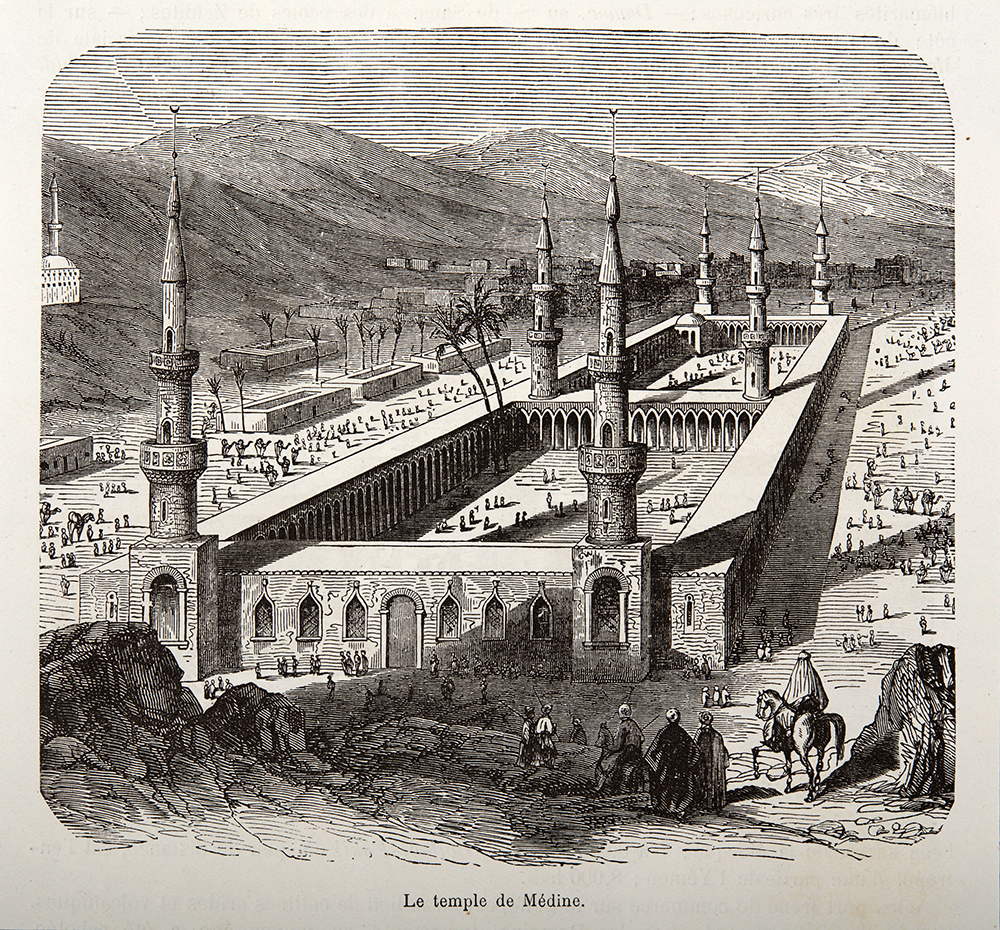
An antique engraving depicting the Prophet’s Mosque in Medina, surrounded by its arcaded courtyards and dominated by its soaring minarets. Produced in accordance with the conventions of nineteenth-century travel accounts and illustrated publications, this view reflects the growing interest of Western scholars and travelers in the holy sites of Islam. The composition portrays worshippers, caravans, and the surrounding landscape, offering a historical glimpse of the city of Medina before the architectural transformations of the modern era.

Estimated date: 19th century.
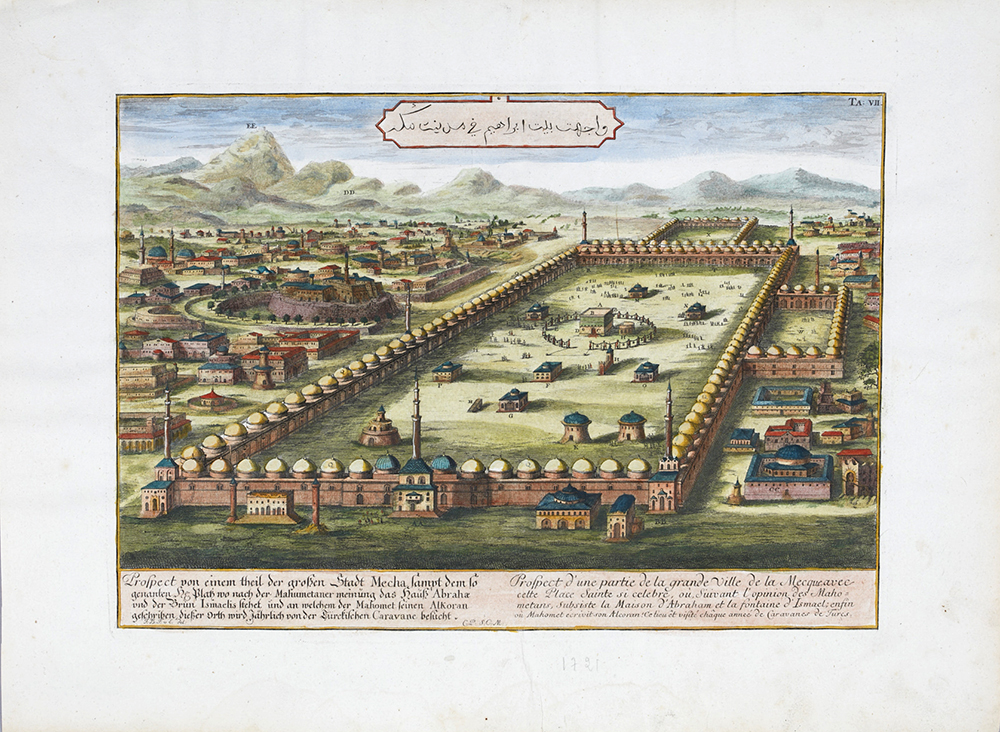
Ancient View of the City of Mecca and the Grand Mosque

ICO 345

A hand-colored engraving depicting the city of Mecca and the enclosure of the Grand Mosque in perspective. The composition highlights the Kaaba at the center of the Sacred Mosque (al-Masjid al-Haram), together with the principal buildings and surrounding neighborhoods. Produced according to the cartographic and descriptive conventions of European travelers, this engraving provides a valuable record of how Islam’s holiest sites were perceived and represented before the urban transformations of the modern era. It also reflects the significance of Mecca as the spiritual center of Islam and the foremost destination of the Muslim pilgrimage.

Estimated date: 18th century.

The Dome of the Rock in Jerusalem

ICO 428

Hand-colored engraving depicting the Dome of the Rock at the heart of the Haram al-Sharif in Jerusalem. Dominated by its famous golden dome, the sanctuary is shown surrounded by worshippers and visitors on the Temple Mount (the Noble Sanctuary). Based on the surveys and observations of nineteenth-century travelers, this illustration highlights one of the most iconic monuments of Islamic architecture. It reflects the spiritual and historical significance of Jerusalem in the Muslim tradition, as well as the fascination this sacred site held for Western artists and travelers.

Estimated date: 19th century.

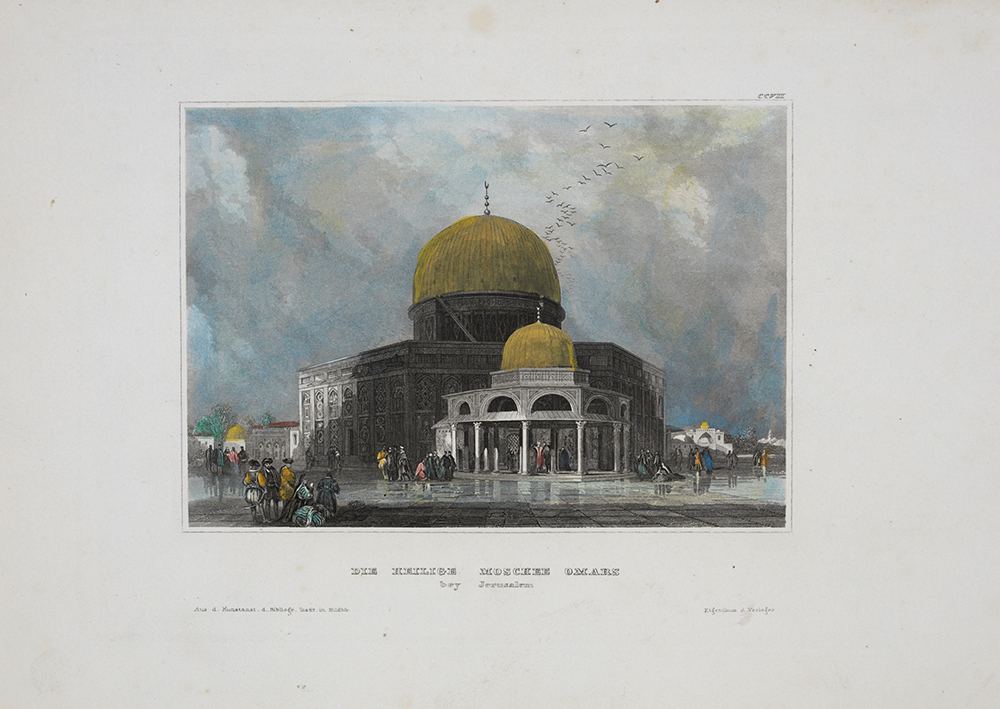
View of the Great Mosque of Mecca

ICO 172

An antique engraving depicting the Great Mosque of Mecca, with the Kaaba at the center of its sacred enclosure. Executed from an aerial perspective, this view highlights the layout of the Haram, its arcaded galleries, and the principal structures surrounding the sanctuary. A valuable example of nineteenth-century Western iconography of Islam’s holy sites, it offers a glimpse of the mosque’s configuration before the major architectural transformations of the modern era.

Estimated date: 19th century.
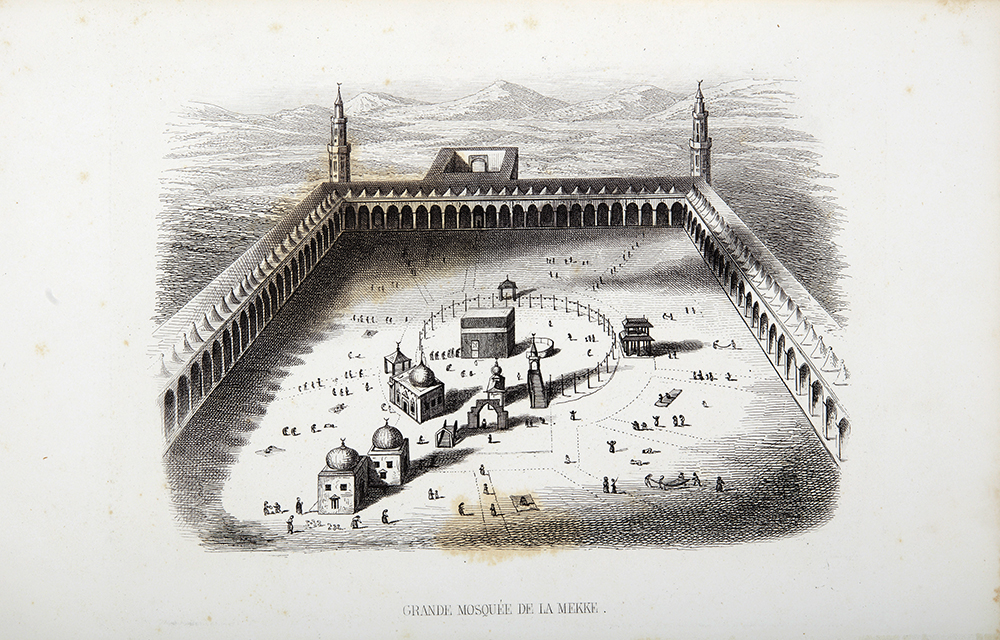
Medina and the Pilgrims’ Encampment

ICO 178

Panoramic engraving depicting the city of Medina and the encampments erected outside its walls during the pilgrimage season. Dominated by the minarets and domes of the Prophet’s Mosque, the city is surrounded by a vast expanse of tents accommodating travelers who have come to visit the holy sites. This scene provides a remarkable testimony to the organization of the pilgrimage in the 19th century and highlights Medina’s importance as a spiritual center and a gathering place for pilgrims from across the Muslim world.

Estimated date: 19th century.

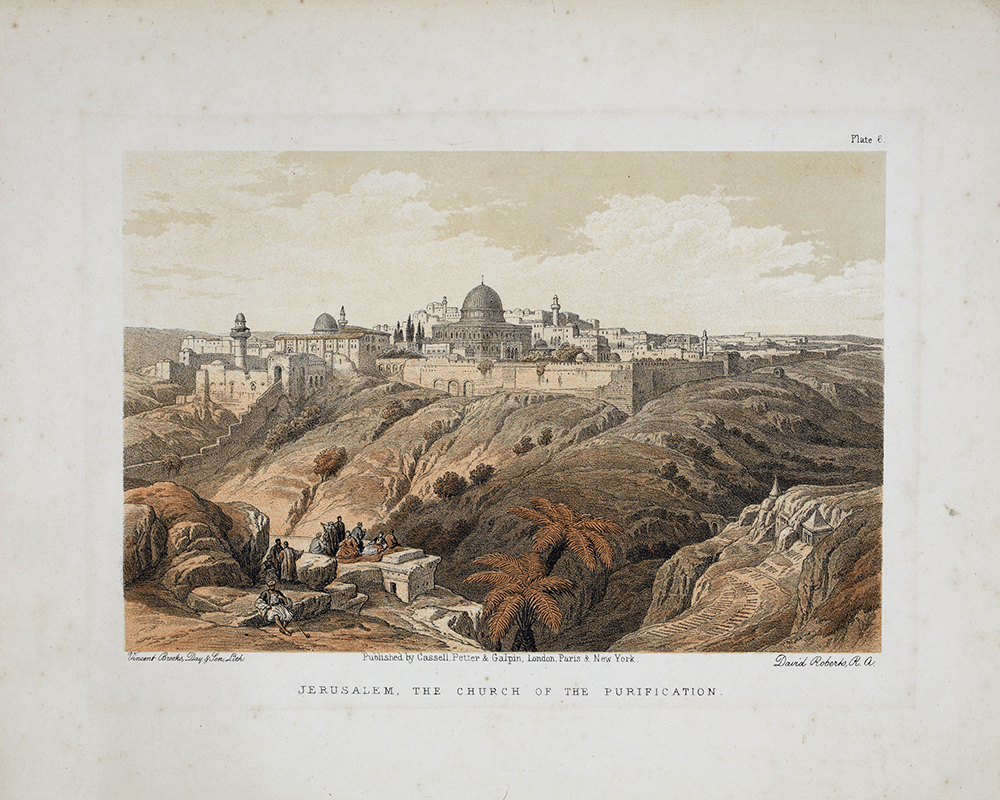
View of Jerusalem and the Haram al-Sharif

ICO 430

An engraving depicting a panoramic view of Jerusalem, dominated by the Dome of the Rock and the principal monuments of the Haram al-Sharif. Created by the Scottish artist David Roberts (1796–1864), renowned for his travels in the Middle East, this composition highlights the monumental character of the sanctuary within its natural and urban setting. The steep hills in the foreground enhance the grandeur of the Holy City and reflect the Romantic vision through which nineteenth-century European artists viewed the great pilgrimage sites of the Near East.

Estimated date: 19th century.

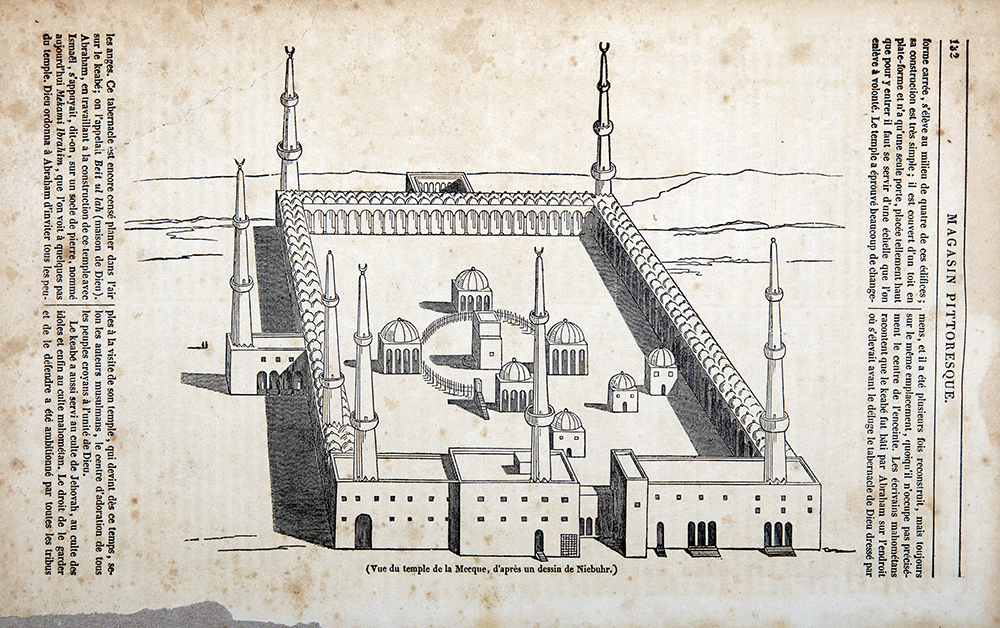
View of the Great Mosque of Mecca

ICO 163

Engraving depicting the Great Mosque of Mecca, with the Kaaba at the center of its sacred enclosure. Based on a drawing by the German explorer and cartographer Carsten Niebuhr (1733–1815), it provides a valuable record of the sanctuary’s appearance before the major transformations of the modern era. The image highlights the architectural layout of the Haram, including its arcades, minarets, and the principal buildings surrounding the Kaaba. Derived from the observations of one of the first European travelers to produce a detailed and relatively reliable account of the Arabian Peninsula, this engraving played an important role in introducing the Islamic holy sites to a Western audience.

Estimated date: 18th century.

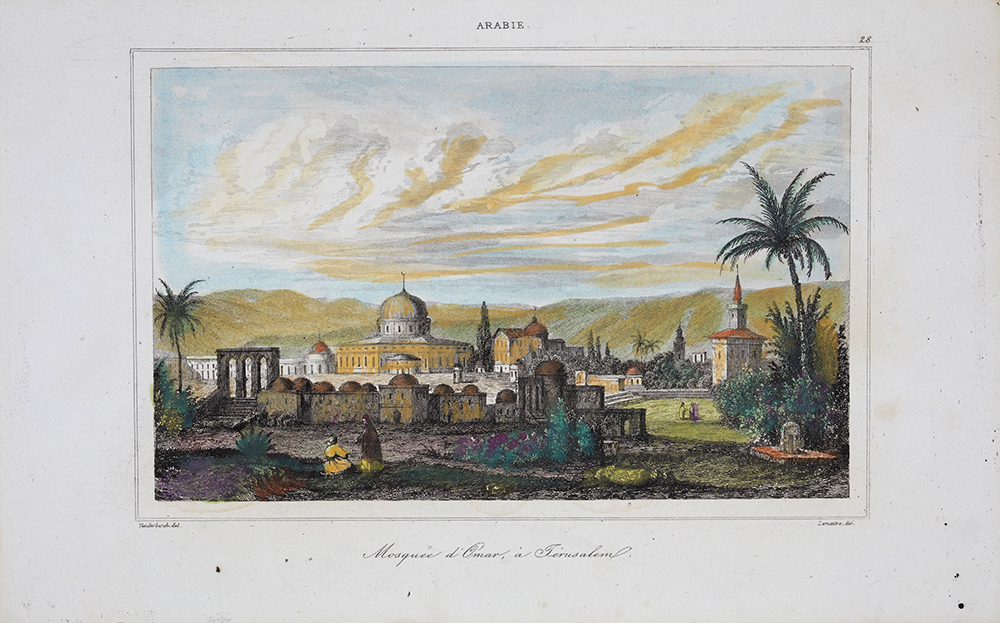
Rock View in Jerusalem

ICO 417

Hand-colored engraving depicting the Dome of the Rock within the Haram al-Sharif enclosure in Jerusalem. Referred to in older European publications as the “Mosque of Omar,” this view reflects the fascination of nineteenth-century travelers and Orientalist scholars with the iconic monuments of the Holy City. Surrounded by gardens, palm trees, and religious buildings, the sanctuary is presented in a picturesque setting that highlights the spiritual and architectural significance of one of Islam’s most revered sites.

Estimated date: 19th century.

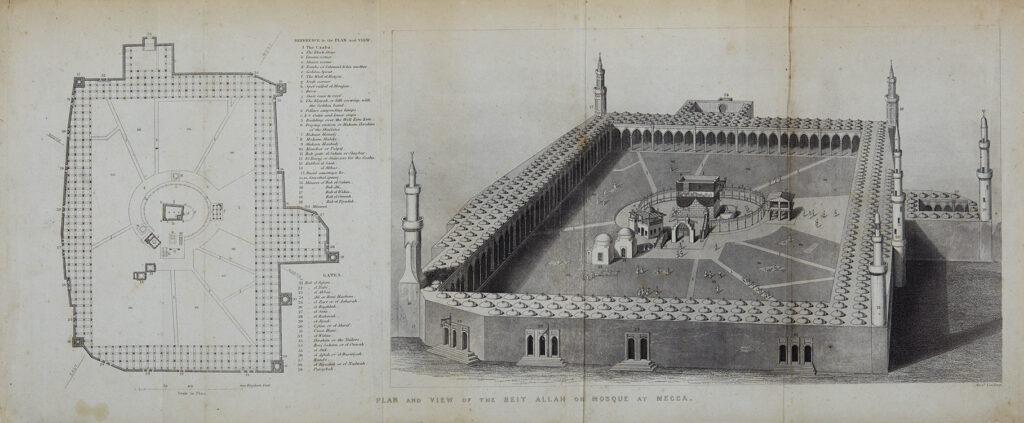
Plan and View of the Great Mosque of Mecca

ICO 184

This engraving combines a detailed plan with a perspective view of the Great Mosque of Mecca, offering both an architectural and topographical representation of the sacred sanctuary. At the center of the composition stands the Kaaba, surrounded by the principal buildings and ritual spaces of the Haram, identified through an explanatory legend. Produced in a scholarly and documentary context, this image reflects the interest of geographers, travelers, and Orientalist scholars in the holy sites of Islam. It constitutes a valuable source for the history of the mosque’s architecture prior to the major transformations of the modern era.

Estimated date: 19th century.
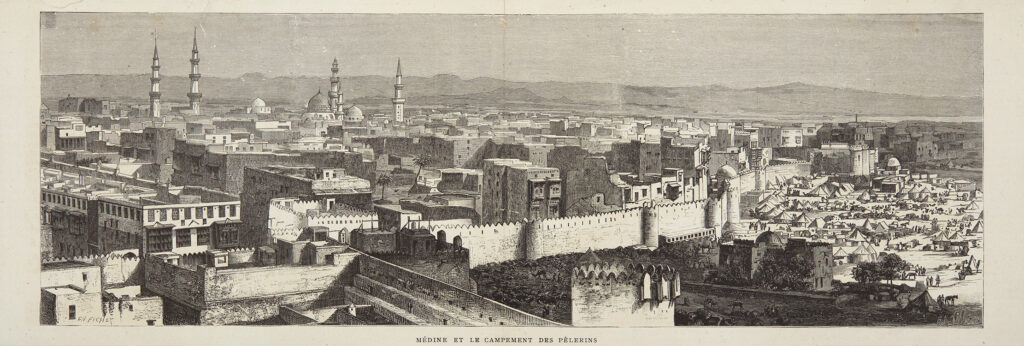
View of the Dome of the Rock in Jerusalem

ICO 426

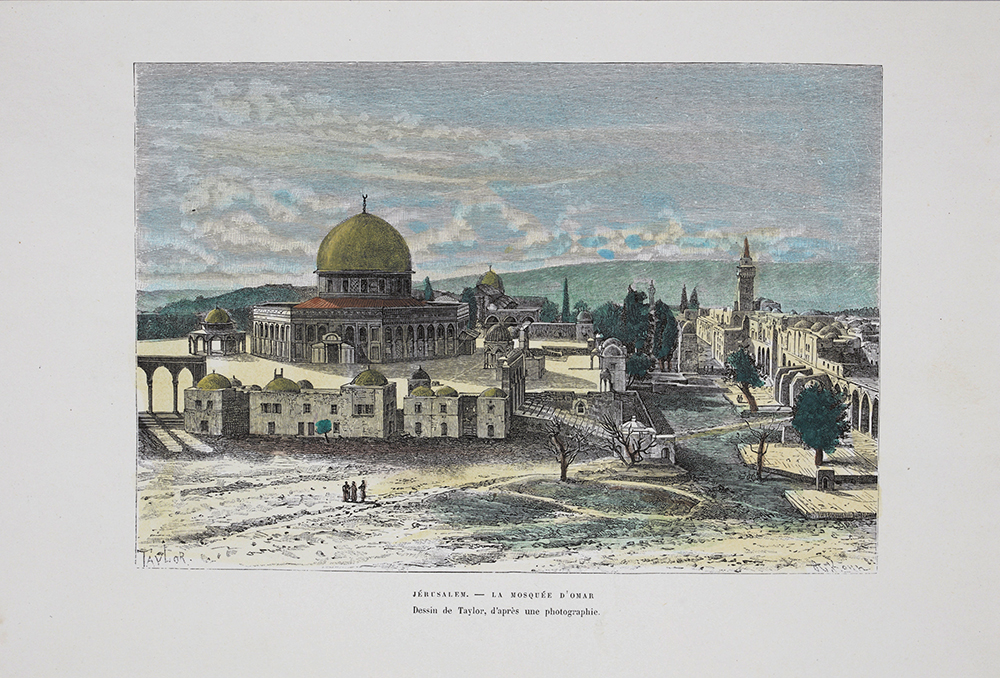
Hand-colored engraving depicting the Dome of the Rock within the Haram al-Sharif in Jerusalem. Based on a photograph and drawn by Taylor, this view highlights one of the most iconic monuments of the Holy City, standing on the Temple Mount (Haram al-Sharif). Frequently referred to in 19th-century European publications as the “Mosque of Omar,” the sanctuary is shown with its imposing golden dome and the surrounding buildings, providing a valuable record of the site’s appearance before the transformations of the modern era.

Estimated date: 19th century.
The Great Mosque of Mecca During the Pilgrimage

ICO 169

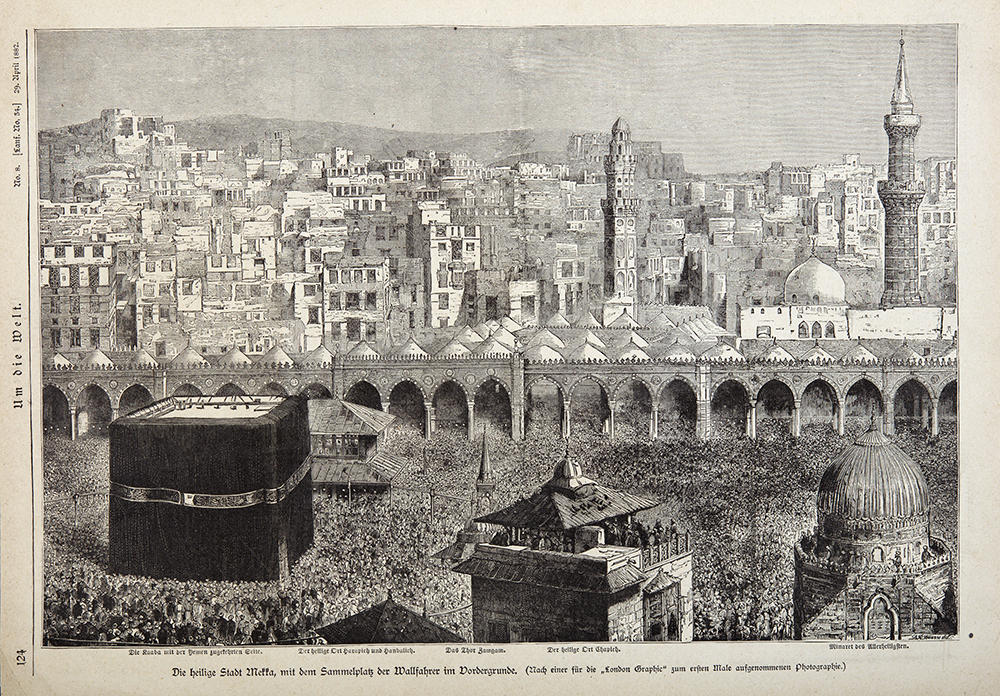
Engraving depicting the Great Mosque of Mecca filled with crowds of pilgrims gathered around the Kaaba. Based on one of the earliest photographs of the sanctuary, it provides a remarkable record of the appearance of the Haram and the city of Mecca in the 19th century, before the major transformations of the modern era. The composition highlights the mosque’s arcades, the principal structures within the sanctuary, and the intensity of the crowds during the pilgrimage. This image constitutes a valuable historical document illustrating the urban and architectural evolution of the spiritual heart of Islam.

Estimated date: 19th century (c. 1880–1900).

Makkah – Courtyard of the Kaaba

ICO 173

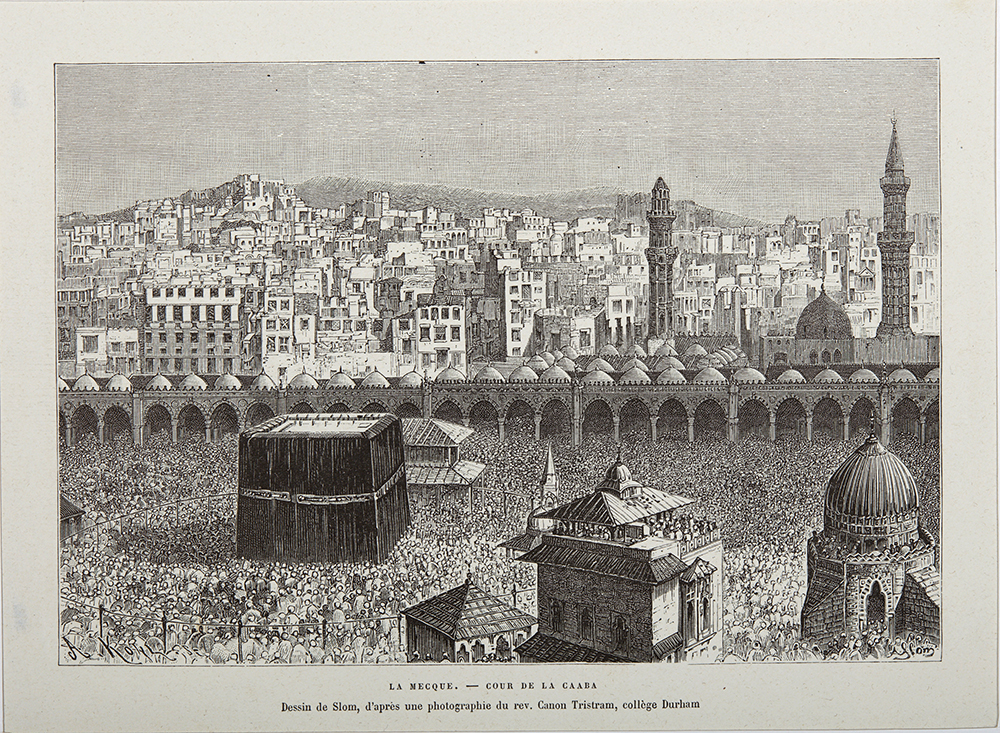
Engraving depicting the courtyard of the Kaaba at the heart of the Great Mosque of Makkah, bustling with a dense crowd of pilgrims performing the rites of the Hajj. Based on a photograph by the Reverend Canon Tristram and drawn by Slom, this image provides a valuable historical record of the sanctuary and the city of Makkah in the nineteenth century. The composition highlights the Kaaba, the arcades of the Haram, and the principal buildings surrounding the sacred enclosure, offering a historical view of one of the most revered sites in Islam.

Estimated date: 19th century (second half of the 19th century).

Legal Information

Intellectual Property

All content available on this website, including but not limited to texts, photographs, manuscripts, images, illustrations, videos, digitized documents, logos, databases, graphic elements, and other materials, is protected under Swiss and international copyright and intellectual property laws.

Except with the prior written authorization of the ADLANIA Foundation or the relevant rights holders, any reproduction, representation, distribution, adaptation, or exploitation, whether in whole or in part, of this content, by any means or on any medium whatsoever, is prohibited.

The reproductions of the works and documents presented on this website are made available exclusively for purposes of preservation, research, scientific, cultural, and heritage enhancement.

Collections and Archives

The manuscripts, documents, photographs, heritage objects, works of art, and other collections presented on this website are owned by the ADLANIA Foundation or are reproduced with the authorization of their owners or rights holders.

The manuscripts, documents, photographs, heritage objects, works, and other collections presented on this website are owned by the ADLANIA Foundation or are reproduced with the authorization of their owners or rights holders.

Collection Photographs

The photographs of the manuscripts, objects, works of art, and other heritage items presented on this website were taken by photographer Abdou Diouri as part of his collaboration with the ADLANIA Foundation.

These photographs are protected by copyright.

Any reproduction, display, distribution, modification, or use, whether in whole or in part and in any form whatsoever, is prohibited without the prior written authorization of the ADLANIA Foundation and, where applicable, the relevant rights holders.

Privacy Policy

The ADLANIA Foundation is committed to protecting the personal data of visitors to this website. The information collected through contact forms, information requests, registrations, or orders is used exclusively to respond to users' inquiries, manage communications, process orders, and improve the services provided.

Personal data is neither sold, rented, nor disclosed to third parties, except where required by law or when necessary for the provision of a service requested by the user.

In accordance with applicable data protection legislation, each user has the right to access, rectify, erase, restrict the processing of, and, where applicable, object to the processing of their personal data.

Any request may be addressed to the ADLANIA Foundation using the contact details provided on the website.

Cookie Policy

This website uses cookies to ensure its proper functioning, enhance the browsing experience, and, where applicable, measure website traffic.

Strictly necessary cookies required for the operation of the website are placed automatically. Other categories of cookies, including those used for audience measurement or provided by third-party services, are only used after the user's consent has been obtained, where required by applicable law.

The user may, at any time, manage or withdraw their consent through their browser settings or via the cookie consent manager, where available.

Legal Information

Intellectual Property

All content available on this website, including but not limited to texts, photographs, manuscripts, images, illustrations, videos, digitized documents, logos, databases, graphic elements, and other materials, is protected under Swiss and international copyright and intellectual property laws.

Except with the prior written authorization of the ADLANIA Foundation or the relevant rights holders, any reproduction, representation, distribution, adaptation, or exploitation, whether in whole or in part, of this content, by any means or on any medium whatsoever, is prohibited.

The reproductions of the works and documents presented on this website are made available exclusively for purposes of preservation, research, scientific, cultural, and heritage enhancement.

Collections and Archives

The manuscripts, documents, photographs, heritage objects, works of art, and other collections presented on this website are owned by the ADLANIA Foundation or are reproduced with the authorization of their owners or rights holders.

The manuscripts, documents, photographs, heritage objects, works, and other collections presented on this website are owned by the ADLANIA Foundation or are reproduced with the authorization of their owners or rights holders.

Collection Photographs

The photographs of the manuscripts, objects, works of art, and other heritage items presented on this website were taken by photographer Abdou Diouri as part of his collaboration with the ADLANIA Foundation.

These photographs are protected by copyright.

Any reproduction, display, distribution, modification, or use, whether in whole or in part and in any form whatsoever, is prohibited without the prior written authorization of the ADLANIA Foundation and, where applicable, the relevant rights holders.

Privacy Policy

The ADLANIA Foundation is committed to protecting the personal data of visitors to this website. The information collected through contact forms, information requests, registrations, or orders is used exclusively to respond to users' inquiries, manage communications, process orders, and improve the services provided.

Personal data is neither sold, rented, nor disclosed to third parties, except where required by law or when necessary for the provision of a service requested by the user.

In accordance with applicable data protection legislation, each user has the right to access, rectify, erase, restrict the processing of, and, where applicable, object to the processing of their personal data.

Any request may be addressed to the ADLANIA Foundation using the contact details provided on the website.

Cookie Policy

This website uses cookies to ensure its proper functioning, enhance the browsing experience, and, where applicable, measure website traffic.

Strictly necessary cookies required for the operation of the website are placed automatically. Other categories of cookies, including those used for audience measurement or provided by third-party services, are only used after the user's consent has been obtained, where required by applicable law.

The user may, at any time, manage or withdraw their consent through their browser settings or via the cookie consent manager, where available.