Zoomorphic Calligraphy

The art of zoomorphic calligraphy is one of the most original expressions of Islamic calligraphy. Developed from the medieval period across various regions of the Muslim world, it consists of creating figures of real or imaginary animals using letters, words, or calligraphed verses.

This artistic form reflects the remarkable virtuosity of calligraphers, who skillfully unite the meaning of the text with the beauty of the composition. Lions, birds, horses, peacocks, gazelles, and symbolic creatures emerge from the written word, while calligraphy retains its primary purpose: conveying sacred texts, wisdom, or invocations.

Far more than a decorative achievement, zoomorphic calligraphy embodies a vision in which writing becomes a visual language. It illustrates the richness of the artistic traditions of Islamic civilization, where the letter is transformed into an image while preserving its spiritual significance.

Through this collection, the ADLANIA Foundation invites visitors to discover a unique heritage where the mastery of the pen, the imagination of artists, and the depth of the calligraphic message come together.

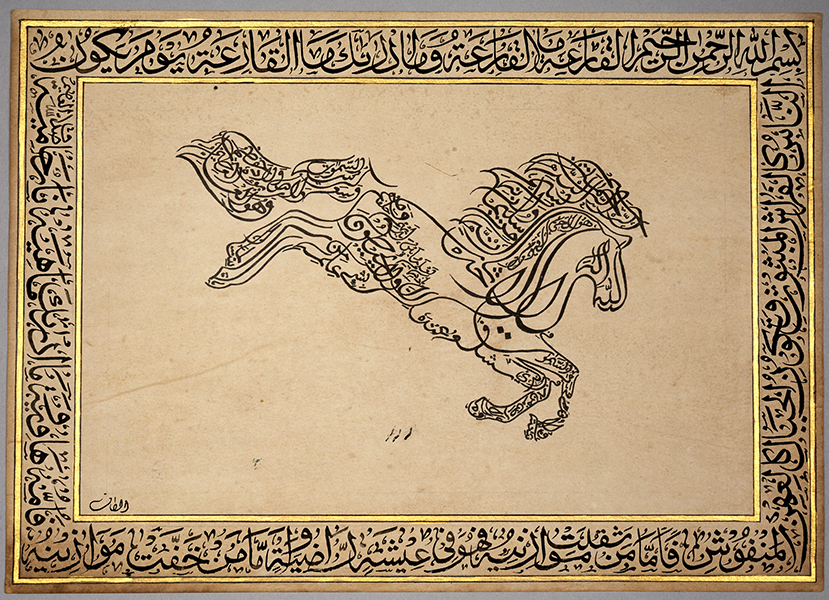
Horse in Zoomorphic Calligraphy

MAN 499

This zoomorphic calligraphy depicts a galloping horse whose silhouette is entirely composed of an intricate interlacing of Arabic letters. Created by the calligrapher Al-Tâf, the work showcases the virtuosity of Islamic calligraphy, transforming written script into an elegant figurative composition.

Through the fluidity of its lines and the dynamic arrangement of the letters, the horse appears full of natural movement. A symbol of nobility, strength, and courage in Islamic culture, the horse here becomes the support for a composition in which the harmony of the text and the harmony of the form are seamlessly united.

The composition is framed by a calligraphic border reproducing Surah 101 – Al-Qāri‘ah (The Striking Calamity). This calligraphic frame enhances the central figure while emphasizing the close relationship between artistic expression and the transmission of the sacred text.
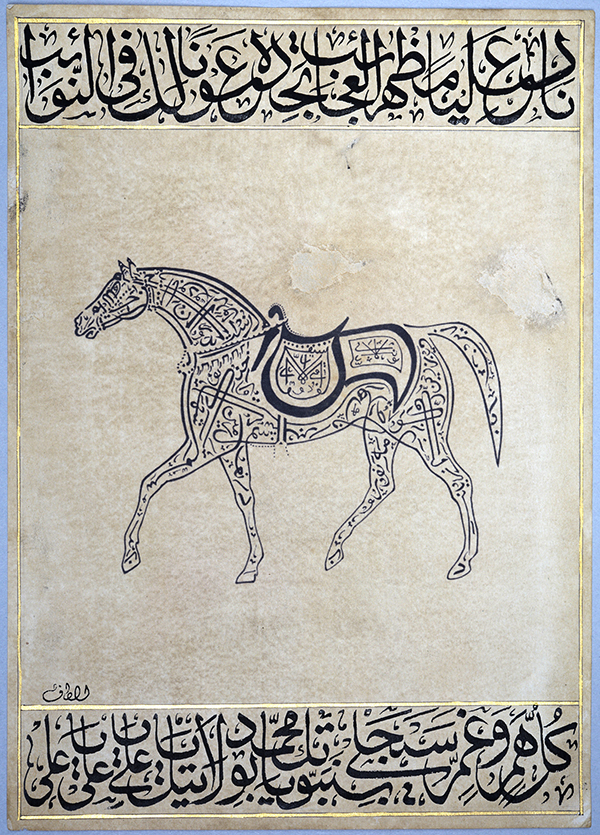
Harnessed Horse in Zoomorphic Calligraphy

MAN 504

This zoomorphic calligraphy depicts a harnessed horse whose entire silhouette is formed from an intricate interlacing of Arabic letters. Created by the calligrapher Al-Tâf, the work showcases the precision of the line and the ingenuity of its composition, with every part of the animal skillfully shaped from harmoniously integrated calligraphic inscriptions.

Unlike depictions of horses in motion, this horse is portrayed in a calm and majestic stance, emphasizing its elegance and nobility. In the Islamic tradition, the horse symbolizes courage, loyalty, and excellence—qualities that the calligrapher conveys through the balanced proportions of the composition and the refinement of the script.

The composition is framed at both the top and bottom by calligraphic bands that enhance the harmony of the overall design and illustrate the enduring dialogue between the art of writing and figurative representation.

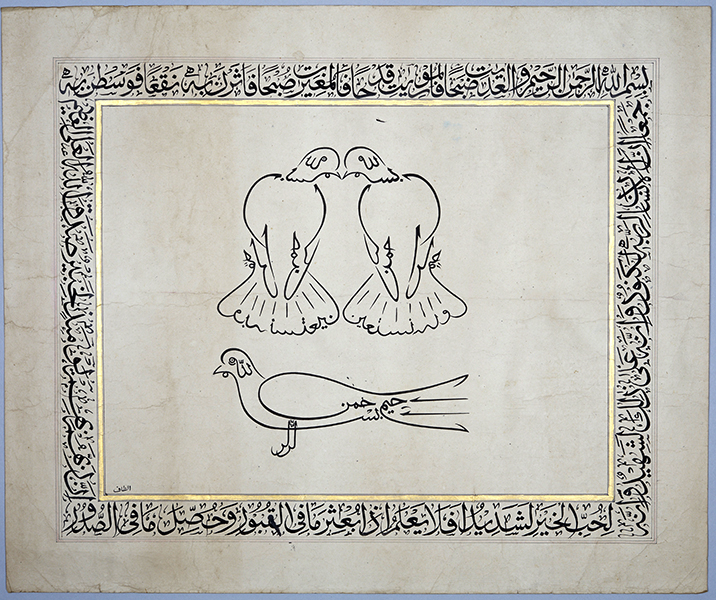
Three Birds in Zoomorphic Calligraphy

MAN 458

This composition brings together three zoomorphic calligraphic representations of birds. The two doves in the upper section and the bird in the lower section are entirely formed from the basmala (Bismi Allāh al-Raḥmān al-Raḥīm), whose letters gracefully follow the contours of the figures.

The composition is enclosed within a calligraphic border reproducing Sūrat al-ʿĀdiyāt (Qur’an, Sūrah 100, The Galloping Steeds), whose rhythmic power and expressive force contrast with the delicacy of the central motifs.

Through the sobriety of its lines and the mastery of its execution, this work exemplifies the art of calligraphers who transformed a sacred formula into a figurative image while preserving both the legibility and the dignity of the Qur’anic text.

Dove in Zoomorphic Calligraphy

MAN 479

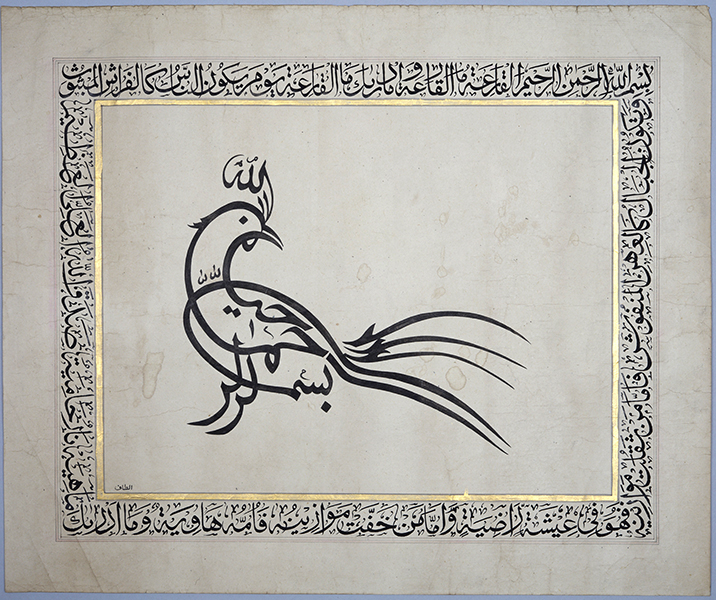
A zoomorphic calligraphy depicting a dove whose entire silhouette is formed from the basmala (Bismi Allāh al-Raḥmān al-Raḥīm). Executed in black ink by the calligrapher Al-Tâf, this work exemplifies the elegance of the Islamic calligraphic tradition, in which script is transformed into imagery while preserving its spiritual significance.

The composition is framed by a calligraphic border reproducing Surah 101 – Al-Qāri‘ah (The Calamity). The contrast between the delicate form of the dove and the frame composed of Qur’anic text highlights the balance between artistic expression and the transmission of the revealed Word.

Through the fluidity of its lines and the harmony of its composition, this work reflects the ingenuity of calligraphers who elevated zoomorphic calligraphy into an art form where the beauty of writing merges with the power of symbolic representation.

Zoomorphic Calligraphy Bird

MAN 440

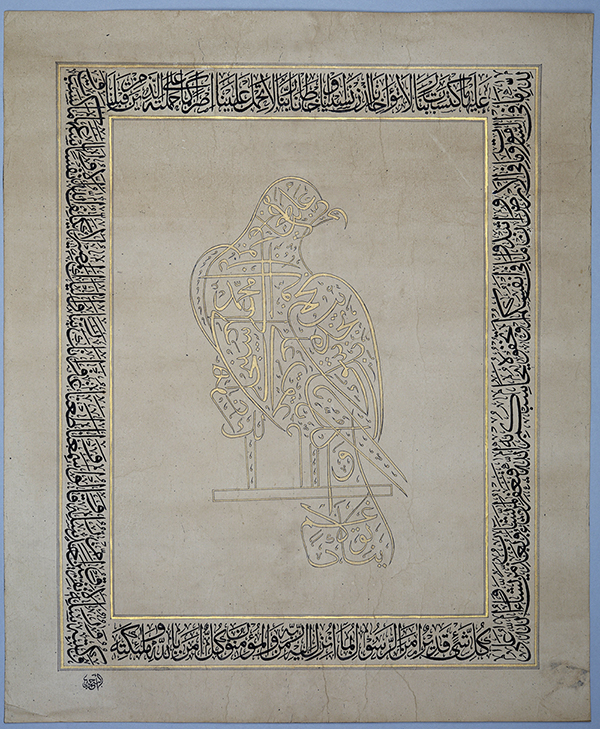
This zoomorphic calligraphy depicts a perched bird of prey, entirely composed of an intricate interlacing of Arabic letters that form a composition of remarkable refinement. Created by the calligrapher Ahmed, the work exemplifies the mastery of an art in which writing becomes image while preserving its spiritual significance.

The central composition is framed by a border containing the concluding verses of Surah 2, Al-Baqarah (The Cow).

Among the most frequently recited verses of the Qur’an, these passages encircle the figure as a symbolic form of protection, while the body of the bird itself is constructed from a harmonious network of calligraphic letters.

This work bears witness to the creativity of Muslim calligraphers, who skillfully united the precision of script, the harmony of form, and the depth of spiritual meaning within a single composition.

Zoomorphic Fish Calligraphy

MAN 538

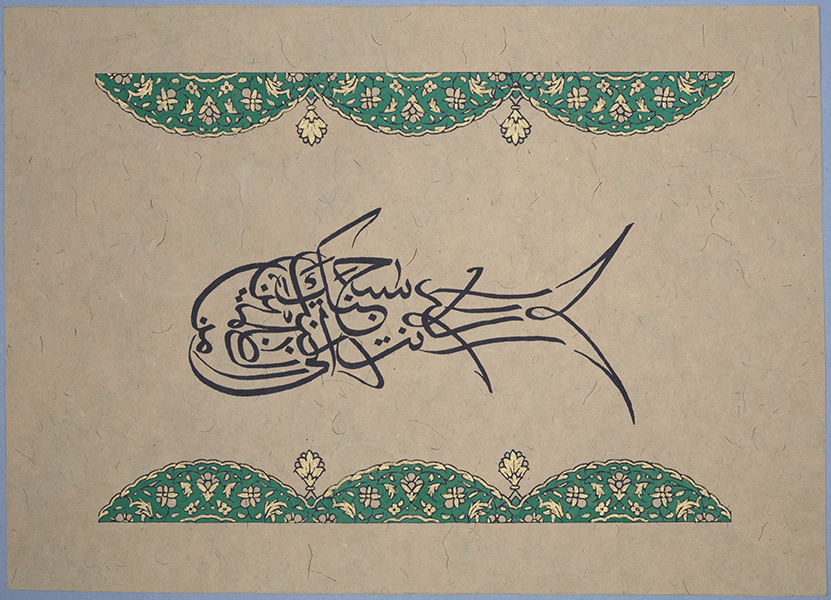
A zoomorphic calligraphic composition depicting a fish, whose entire silhouette is formed by the following invocation:

Glory be to You! Indeed, I have been among the wrongdoers.
Qur’an, Surah 21 – Al-Anbiyā’ (The Prophets), verse 87.

This well-known supplication is that of the Prophet Yūnus (Jonah), who called upon God from the depths of the great fish. In the Islamic tradition, it has become a powerful symbol of repentance, trust in God, and hope for deliverance.

The calligraphic composition is framed by illuminated floral borders in green and gold tones, enhancing the sobriety of the black script and the elegance of the overall design. The artwork beautifully demonstrates the ability of Islamic calligraphy to unite the spiritual power of the sacred text with symbolic representation.

Owl in Zoomorphic Calligraphy

MAN 498

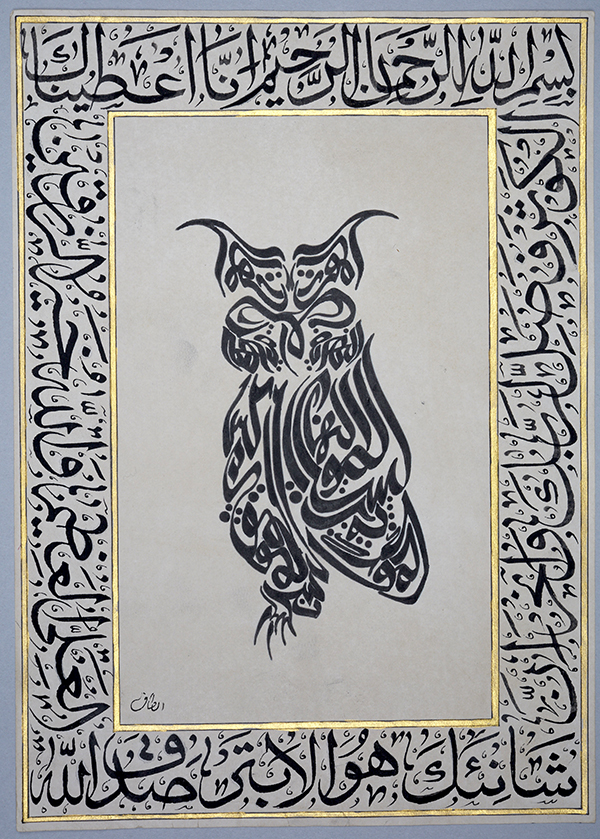
This zoomorphic calligraphy depicts an owl whose silhouette is entirely formed by an intricate arrangement of Arabic letters. Created by the calligrapher Al-Tâf, the composition exemplifies the harmonious fusion of the art of calligraphy with figurative representation, a distinctive feature of the tradition of zoomorphic calligraphy.

The owl, a symbol of vigilance and contemplation in many cultural traditions, is rendered with remarkable graphic restraint and elegance. The flowing curves and interwoven ligatures of the Arabic script naturally shape the various parts of the bird, demonstrating the calligrapher’s mastery in transforming writing into a balanced and expressive image.

The composition is framed by a calligraphic border reproducing Surah 108, Al-Kawthar (The Abundance), the shortest chapter of the Qur’an. This sacred frame enhances the central composition while emphasizing the profound union between the beauty of the revealed text and the beauty of artistic form.

Legal Information

Intellectual Property

All content available on this website, including but not limited to texts, photographs, manuscripts, images, illustrations, videos, digitized documents, logos, databases, graphic elements, and other materials, is protected under Swiss and international copyright and intellectual property laws.

Except with the prior written authorization of the ADLANIA Foundation or the relevant rights holders, any reproduction, representation, distribution, adaptation, or exploitation, whether in whole or in part, of this content, by any means or on any medium whatsoever, is prohibited.

The reproductions of the works and documents presented on this website are made available exclusively for purposes of preservation, research, scientific, cultural, and heritage enhancement.

Collections and Archives

The manuscripts, documents, photographs, heritage objects, works of art, and other collections presented on this website are owned by the ADLANIA Foundation or are reproduced with the authorization of their owners or rights holders.

The manuscripts, documents, photographs, heritage objects, works, and other collections presented on this website are owned by the ADLANIA Foundation or are reproduced with the authorization of their owners or rights holders.

Collection Photographs

The photographs of the manuscripts, objects, works of art, and other heritage items presented on this website were taken by photographer Abdou Diouri as part of his collaboration with the ADLANIA Foundation.

These photographs are protected by copyright.

Any reproduction, display, distribution, modification, or use, whether in whole or in part and in any form whatsoever, is prohibited without the prior written authorization of the ADLANIA Foundation and, where applicable, the relevant rights holders.

Privacy Policy

The ADLANIA Foundation is committed to protecting the personal data of visitors to this website. The information collected through contact forms, information requests, registrations, or orders is used exclusively to respond to users' inquiries, manage communications, process orders, and improve the services provided.

Personal data is neither sold, rented, nor disclosed to third parties, except where required by law or when necessary for the provision of a service requested by the user.

In accordance with applicable data protection legislation, each user has the right to access, rectify, erase, restrict the processing of, and, where applicable, object to the processing of their personal data.

Any request may be addressed to the ADLANIA Foundation using the contact details provided on the website.

Cookie Policy

This website uses cookies to ensure its proper functioning, enhance the browsing experience, and, where applicable, measure website traffic.

Strictly necessary cookies required for the operation of the website are placed automatically. Other categories of cookies, including those used for audience measurement or provided by third-party services, are only used after the user's consent has been obtained, where required by applicable law.

The user may, at any time, manage or withdraw their consent through their browser settings or via the cookie consent manager, where available.

Legal Information

Intellectual Property

All content available on this website, including but not limited to texts, photographs, manuscripts, images, illustrations, videos, digitized documents, logos, databases, graphic elements, and other materials, is protected under Swiss and international copyright and intellectual property laws.

Except with the prior written authorization of the ADLANIA Foundation or the relevant rights holders, any reproduction, representation, distribution, adaptation, or exploitation, whether in whole or in part, of this content, by any means or on any medium whatsoever, is prohibited.

The reproductions of the works and documents presented on this website are made available exclusively for purposes of preservation, research, scientific, cultural, and heritage enhancement.

Collections and Archives

The manuscripts, documents, photographs, heritage objects, works of art, and other collections presented on this website are owned by the ADLANIA Foundation or are reproduced with the authorization of their owners or rights holders.

The manuscripts, documents, photographs, heritage objects, works, and other collections presented on this website are owned by the ADLANIA Foundation or are reproduced with the authorization of their owners or rights holders.

Collection Photographs

The photographs of the manuscripts, objects, works of art, and other heritage items presented on this website were taken by photographer Abdou Diouri as part of his collaboration with the ADLANIA Foundation.

These photographs are protected by copyright.

Any reproduction, display, distribution, modification, or use, whether in whole or in part and in any form whatsoever, is prohibited without the prior written authorization of the ADLANIA Foundation and, where applicable, the relevant rights holders.

Privacy Policy

The ADLANIA Foundation is committed to protecting the personal data of visitors to this website. The information collected through contact forms, information requests, registrations, or orders is used exclusively to respond to users' inquiries, manage communications, process orders, and improve the services provided.

Personal data is neither sold, rented, nor disclosed to third parties, except where required by law or when necessary for the provision of a service requested by the user.

In accordance with applicable data protection legislation, each user has the right to access, rectify, erase, restrict the processing of, and, where applicable, object to the processing of their personal data.

Any request may be addressed to the ADLANIA Foundation using the contact details provided on the website.

Cookie Policy

This website uses cookies to ensure its proper functioning, enhance the browsing experience, and, where applicable, measure website traffic.

Strictly necessary cookies required for the operation of the website are placed automatically. Other categories of cookies, including those used for audience measurement or provided by third-party services, are only used after the user's consent has been obtained, where required by applicable law.

The user may, at any time, manage or withdraw their consent through their browser settings or via the cookie consent manager, where available.